

When you feel bad, find a person to talk to and cry with, to tell of your anger and other helpless feelings.
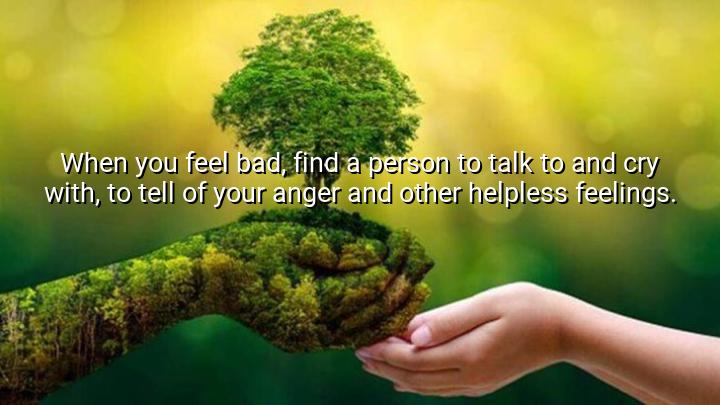




In this quote, Clarissa Pinkola Estés emphasizes the importance of emotional expression and the healing power of sharing one’s feelings with others. She suggests that when someone is feeling bad, whether it be from anger or feelings of helplessness, it can be incredibly therapeutic to confide in another person. The act of talking about one’s emotions and crying together creates a sense of connection and provides an opportunity to release pent-up feelings, which can help ease emotional pain.
Estés highlights that anger and helplessness are natural but difficult emotions to carry alone. By sharing these feelings with a trusted person, individuals can feel supported and less isolated in their emotional struggles. The quote reflects the idea that human connection and vulnerability are essential components of emotional health and that sometimes, the best way to cope with difficult emotions is to allow oneself to be seen and heard by someone else.
The origin of this quote lies in Estés' work as a psychoanalyst and author, particularly in her book Women Who Run With the Wolves, where she explores the deep connection between emotions, storytelling, and personal healing. Estés draws from her understanding of psychology and folk wisdom, encouraging people, especially women, to honor and express their feelings instead of suppressing them. She believes that talking through difficult emotions is a powerful tool for reclaiming emotional strength and resilience.
Ultimately, Estés’ quote underscores the value of emotional sharing and the strength that comes from connecting with others in times of distress. It suggests that by expressing feelings of anger and helplessness, individuals can begin the process of healing and reclaiming control over their emotional well-being, fostering deeper relationships and personal growth.

MLtran minh long
This quote makes me reflect on the healing power of empathy and human connection. I wonder if the act of crying together builds trust and deepens relationships in unique ways. Could group therapy or support groups offer a collective version of this healing? Also, how do different personality types respond to this kind of emotional sharing—do some find it easier or harder than others?
UBUyen Bao
It’s powerful to think about anger and helpless feelings being shared openly, but what about boundaries? How can someone ensure that they’re not overburdening their support person? Is there a balance between expressing emotions and maintaining healthy relationships? I’d love to explore strategies that make mutual emotional support sustainable without creating dependency.
TLThinh Le
This quote highlights a simple yet profound way to deal with emotional pain—talking and crying with someone. I’m curious if cultural attitudes toward showing vulnerability affect how often people follow this advice. In some places, crying might be stigmatized, especially among men. How can we change societal norms to encourage more open emotional expression and reduce stigma around seeking support?
TVNguyen Thao Van
I appreciate the emphasis on sharing difficult emotions rather than bottling them up. But what about those who feel isolated or don’t have trusted people to confide in? Does this advice still hold, or are there alternative ways to process anger and helplessness? Maybe therapy or journaling can help, but I’d like to hear perspectives on how to find connection when it seems unavailable.
DNdang nguyenhong
This advice feels so human and vulnerable. I wonder how many people actually have someone they can open up to about anger and helplessness without fear of judgment? It also raises questions about the importance of emotional support systems in mental health. Is the act of crying with someone truly healing, and how can we cultivate more spaces where people feel safe to express these raw feelings?