

Let us not look back in anger, nor forward in fear, but around in awareness.
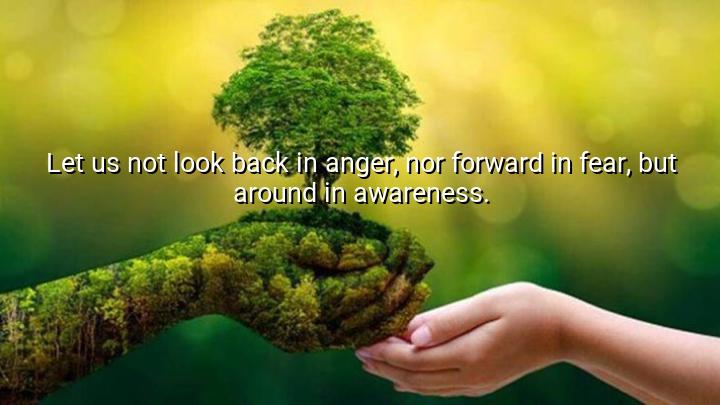




The quote by James Thurber — "Let us not look back in anger, nor forward in fear, but around in awareness." — encourages us to focus on the present moment rather than dwelling on past resentments or future anxieties. Thurber suggests that by letting go of anger and fear, we free ourselves from emotional burdens that prevent us from fully engaging with life as it is right now. Instead of being trapped by past regrets or future uncertainties, we should live with awareness of the present and its opportunities.
Thurber’s message speaks to the human tendency to either hold on to the past or worry about the future. Anger toward past events can prevent personal growth, while fear of what is to come can paralyze us from taking action. By advocating for a focus on awareness, Thurber highlights the importance of being present, paying attention to what is happening around us, and making the most of the current moment. This approach leads to greater peace and clarity.
This quote encourages mindfulness and living consciously, something deeply rooted in many philosophical traditions, such as Buddhism and Stoicism, which also stress the value of being present. Instead of allowing external events to dictate our emotional state, we should cultivate an inner awareness that allows us to respond to life with calm and clarity, free from the shackles of past grievances and future worries.
In essence, Thurber's words offer a simple yet powerful reminder: life is best lived when we are aware of the present moment. By letting go of anger and fear, we open ourselves to new experiences, better relationships, and more meaningful connections with the world around us. Awareness becomes a tool for peace, grounding us in the now.

MNNgoc Minh Nguyen
Reading this, I’m reminded of how often people live in autopilot, reacting emotionally to past or future worries. What techniques help break this cycle and bring us back to present awareness? Could regular pauses, meditation, or nature walks be effective? It also raises a question: how does awareness help us face current challenges without being paralyzed by them?
KLDang Thi Khanh Ly
Thurber’s words suggest a gentle yet powerful shift in perspective. It makes me ask whether societies or cultures emphasize this awareness, or if we’re too focused on past grievances and future fears collectively. How might education systems incorporate this philosophy to promote mental health and emotional balance? It seems like a valuable tool for reducing stress and fostering empathy.
LQLe Quynh
This statement invites reflection on the balance between reflection, anticipation, and presence. How can we acknowledge the past and prepare for the future without being overwhelmed by negative emotions? Is ‘awareness’ about observing without judgment or actively engaging with our surroundings? I wonder how this mindset affects relationships and decision-making in practical terms.
HDVu Hoang Dang
I find this quote both comforting and challenging. It’s easy to say don’t dwell on anger or fear, but much harder to practice it daily. What role does awareness play in emotional healing and resilience? Can being fully present help us respond more thoughtfully to life’s difficulties? I’m curious if this idea aligns with any particular philosophical or psychological traditions, like Stoicism or mindfulness.
PTbui phuong thao
James Thurber’s quote beautifully encourages living in the present moment. It makes me wonder how often we get caught up in past regrets or future anxieties, missing what’s around us. How can we cultivate this ‘awareness’ in our busy lives? Is mindfulness practice the key, or are there other ways to stay grounded? I’d love to hear strategies for shifting focus from fear and anger to conscious presence.