

Through my experiences, I was living with anger and hatred, which was a really bad thing for me. Then I learned how to forgive, and it freed me from hatred and helped me a lot.
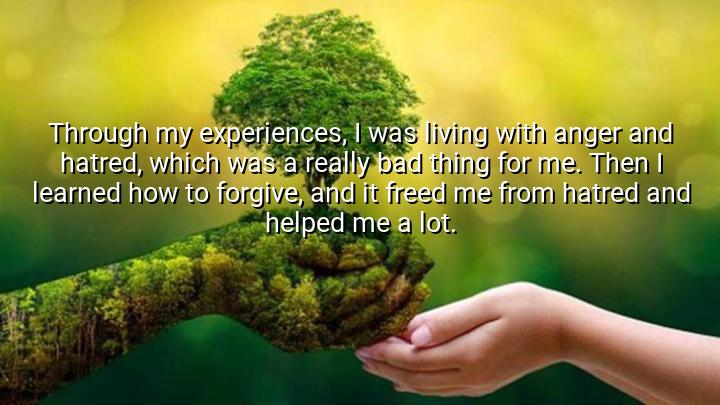




In this quote, Phan Thi Kim Phuc reflects on the intense emotional burden of living with anger and hatred, emotions that she recognizes as being harmful to her well-being. She acknowledges that holding onto these negative emotions was detrimental to her mental and emotional health, causing unnecessary pain. Phuc's statement highlights the struggle of carrying such emotions, especially when they are tied to the trauma she endured during the Vietnam War, where she became famously known as the "Napalm Girl."
Phuc then shares a transformative insight: by learning to forgive, she was able to free herself from the grip of hatred. This process of forgiveness became a pivotal moment in her healing, allowing her to move beyond the pain of her past. Through forgiveness, she was not only able to release the burden of anger but also experience emotional freedom and peace, which significantly improved her quality of life.
The origin of this quote stems from Phuc's personal journey of healing after surviving the horrors of war and the subsequent emotional and physical scars she carried. Her path to forgiveness and peace was deeply influenced by her spiritual beliefs and her desire to overcome the suffering she had experienced. Over time, Phuc became an advocate for peace and forgiveness, using her story to inspire others who have faced trauma or hardship.
Ultimately, Phuc’s quote emphasizes the power of forgiveness in breaking the cycle of negative emotions like anger and hatred. By sharing her experience, she encourages others to embrace forgiveness as a means of healing, suggesting that letting go of past resentment can lead to greater emotional freedom and personal growth. Her journey is a testament to the transformative power of emotional release and the peace that can be found through self-compassion and understanding.

VHviet ha
Considering the personal growth described here, what practical steps or mindset changes might help someone move from hatred to forgiveness? Is forgiveness more about letting go of the past or changing how one perceives the offender? Also, how might this process differ for individuals who have experienced collective trauma versus personal grievances?
TTtu thuong
In many societies, anger is often viewed as a natural response to injustice. How do you think this quote challenges or supports the idea that forgiveness is a strength rather than a weakness? Could this perspective influence how people handle conflict on a broader scale, like in politics or community disputes?
HHung
The transformation from living with anger to embracing forgiveness highlights a powerful emotional shift. But I wonder, are there risks to forgiving too quickly, like suppressing valid emotions or enabling harmful behavior? How can someone balance forgiveness with holding people accountable and protecting themselves from future pain?
TTThuy Tien
It's inspiring to hear how forgiveness can act as a form of healing and freedom. Do you believe that learning to forgive is a personal journey, or can external support like therapy or community also play a crucial role? How might culture or upbringing influence someone's ability to forgive after suffering intense anger and hatred?
PHphan hong
How difficult do you think it is for someone to truly forgive after experiencing deep trauma or pain? Forgiveness sounds liberating, but I wonder if it's always possible or fair, especially when the harm done feels irreparable. What do you think distinguishes genuine forgiveness from simply trying to move on without resolving the underlying feelings?