

In times of great stress or adversity, it's always best to keep busy, to plow your anger and your energy into something positive.
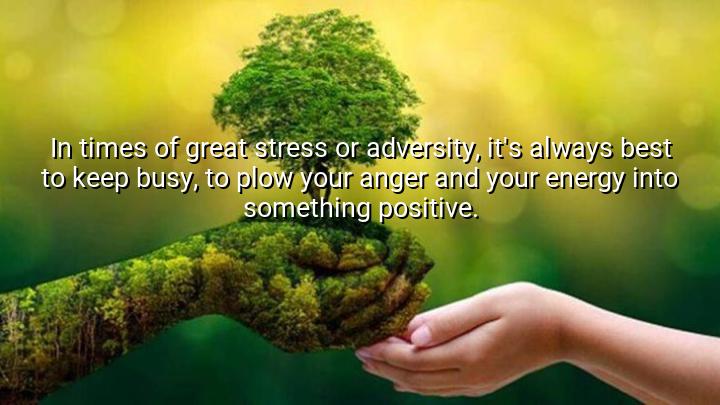




The quote by Lee Iacocca — "In times of great stress or adversity, it's always best to keep busy, to plow your anger and your energy into something positive." — emphasizes the importance of channeling negative emotions and difficult circumstances into productive actions. Rather than succumbing to stress or allowing anger to overwhelm us, Iacocca suggests that we should focus on using those intense feelings and energies to accomplish something constructive. By doing so, we can transform adversity into an opportunity for growth and success.
Iacocca, a renowned businessman known for his leadership at Chrysler, understood the importance of resilience during difficult times. His advice encourages us to avoid stagnation during moments of crisis. Instead of allowing stress or negative emotions to consume us, keeping busy and focusing on positive tasks can provide a sense of control and direction, even when circumstances seem overwhelming. This approach not only helps reduce anxiety but also moves us forward in a productive and purposeful manner.
The idea of redirecting energy and emotions into something positive is a strategy that aligns with many principles of resilience and emotional intelligence. By focusing on tangible outcomes, we prevent ourselves from being paralyzed by emotions like anger, frustration, or fear. The act of doing something productive provides a sense of accomplishment, builds self-confidence, and can lead to personal growth.
Ultimately, Iacocca’s words are a reminder that we have the power to control our responses in the face of adversity. When confronted with stress or anger, instead of letting those emotions hinder us, we can direct them toward positive action, which will not only help us manage difficult situations but also lead us to new opportunities and achievements.

ADAnh Dong
This quote makes me reflect on personal experiences where staying busy helped me overcome challenges. But I wonder if the quality and intention behind the activity matter more than just the act of staying busy. How can mindfulness be integrated into this approach to ensure that our energy is directed positively and thoughtfully?
PHPhuc Hoang
Iacocca’s perspective is inspiring but makes me curious about the role of support systems in turning anger into positive energy. Does having friends, family, or mentors make it easier to channel adversity productively? How do social connections influence our ability to transform negative emotions into meaningful action?
UGUser Google
Reading this, I consider the risk that ‘keeping busy’ might sometimes lead to burnout or avoidance of important issues. How can we ensure that our busyness is truly positive and constructive rather than just a way to escape pain? It also raises the question of how to identify healthy outlets for anger and stress that contribute to growth and healing.
TMThu Mai
This statement prompts me to think about the psychological benefits of staying active during tough times. Does focusing energy on positive pursuits help reduce anxiety and depression? Are there specific strategies or habits that can help people maintain this mindset consistently? I also wonder if this approach is equally effective for everyone or if some might need different coping mechanisms.
TNNguyen Ngoc Tam Nhu
I appreciate the practical nature of this quote, suggesting action as a remedy for adversity. But I wonder if there are times when it’s important to pause and process emotions rather than keep busy. How do we find the balance between productive distraction and necessary reflection? I’d be interested to hear how different cultures or individuals approach this balance.