

Holding on to anger is like grasping a hot coal with the intent of throwing it at someone else; you are the one who gets burned.
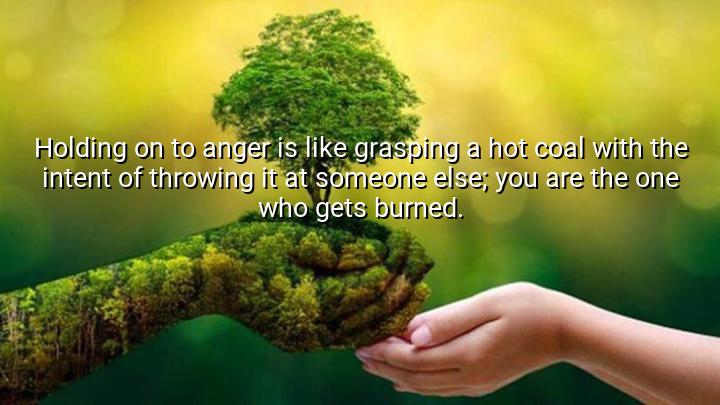




The quote by Buddha — "Holding on to anger is like grasping a hot coal with the intent of throwing it at someone else; you are the one who gets burned." — vividly illustrates the self-destructive nature of holding onto negative emotions like anger. Buddha compares anger to a hot coal, something that can cause harm not only to others but, more importantly, to ourselves. While we may think that directing our anger at someone else will punish them, it is actually us who suffer the consequences, as the anger consumes us from within.
Buddha's teachings focus on the importance of letting go of harmful emotions, as they obstruct our path to inner peace and enlightenment. Holding onto anger or resentment can lead to stress, suffering, and emotional turmoil. The act of clinging to these feelings only causes us to internalize the pain they bring, rather than offering any meaningful resolution to the situation that triggered the anger in the first place.
This metaphor teaches that anger is not only an emotional burden but also a physical and psychological one. The more we hold onto it, the more we hurt ourselves. Buddha advocates for forgiveness, compassion, and mindfulness as ways to release these toxic emotions. By releasing anger, we free ourselves from the pain it causes and make space for healthier, more positive emotions.
Ultimately, Buddha's message is a powerful reminder that holding onto anger is not just an emotional reaction, but a choice that harms us more than anyone else. The quote encourages us to practice self-awareness and to let go of the impulse to seek revenge or punishment through anger, thereby cultivating a more peaceful and fulfilling life.

DNdang nguyen
This quote beautifully summarizes why forgiveness is crucial for our own well-being. However, I wonder about situations where anger feels justified and necessary for change, like activism or confronting injustice. How can one hold space for righteous anger without letting it consume them? It seems like a delicate balance between using anger as fuel and avoiding self-inflicted damage.
HPHuong Pham
The imagery here is vivid and memorable. It’s interesting to consider how anger, which feels outwardly directed, actually backfires inwardly. What does this mean for relationships—do we unintentionally damage our connections by clinging to anger? How might embracing compassion or empathy alter this dynamic? I’d like to hear perspectives on whether anger can ever be completely healthy or necessary.
MCMinh Chau
This makes me reflect on the emotional cost of anger. If holding onto it only harms ourselves, why is it so difficult to let go? Is it because anger feels like a form of control or protection? I wonder how mindfulness or meditation practices can help break this cycle. Also, does this quote imply that forgiveness is more about self-healing than about the person we’re angry at?
NT39.Le Ngoc Tuyen
I find this quote powerful and universally true. But it also raises a question: how do we reconcile the need to stand up for ourselves and seek justice with the advice to release anger? Is there a way to channel anger constructively without holding onto its toxic effects? I’d be interested in exploring how different cultures approach this balance between righteous anger and forgiveness.
QTNguyen Quoc Toan
This metaphor really drives home how self-destructive anger can be. It makes me think about how often we hold onto grudges thinking we’re hurting someone else, when in reality, we’re the ones suffering the most. How can people learn to let go of anger more effectively? Are there practical methods from Buddhism or other traditions that help release this ‘hot coal’ before it burns us further?