

We boil at different degrees.
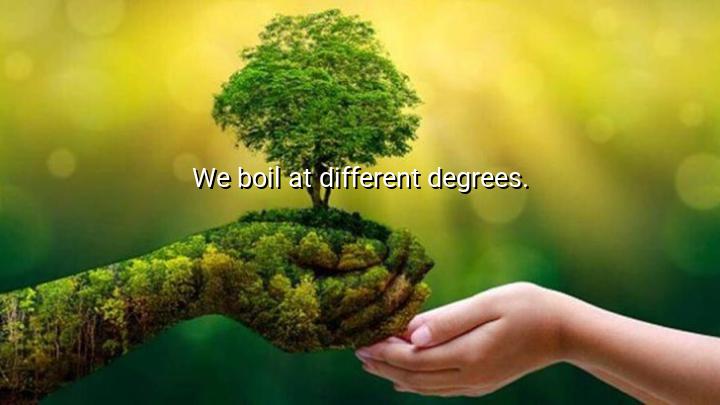




The quote by Clint Eastwood — "We boil at different degrees." — highlights the idea that each person reacts to stress or frustration in their own unique way. Just as water boils at varying temperatures depending on various factors, people have different thresholds for anger, stress, or irritation. Some may reach their boiling point quickly, while others remain calm for longer periods. This analogy emphasizes that emotional responses are highly individual and shaped by personal experiences and temperament.
Eastwood’s quote suggests that understanding and accepting these differences in emotional reactions is crucial for fostering empathy and communication. The degree to which people "boil" may depend on their personality, past experiences, or how they interpret the situation at hand. Recognizing that everyone has a unique emotional threshold allows us to better navigate conflicts and relationships by avoiding unnecessary confrontations and being more considerate of others' feelings.
The quote also points to the concept of self-awareness — understanding our own limits and when we might be nearing our "boiling point." By recognizing the signs of mounting anger or stress, we can take steps to manage our emotions more effectively before they reach a tipping point. This self-control can lead to healthier reactions and decisions, preventing impulsive actions that may be regretful later.
Ultimately, Eastwood’s quote serves as a reminder that emotions are not one-size-fits-all, and recognizing that "we boil at different degrees" helps us appreciate the diversity of human responses. By respecting these differences and practicing self-awareness, we can build more understanding and constructive relationships with those around us.

LPThuy Linh Pham
Eastwood’s metaphor prompts me to consider personal growth—can we ‘raise our boiling point’ through mindfulness or emotional intelligence training? Or are some people just naturally more reactive? It also makes me think about the consequences when someone reaches their limit—how do different ‘boiling points’ affect relationships and decision-making under pressure?
HYHong Yen
Reading this quote, I’m reminded that not everyone experiences stress or anger the same way. How important is it to recognize these differences to avoid misunderstandings? Could this metaphor be applied to managing workplace dynamics or even parenting? It would be interesting to explore strategies for respecting others’ emotional limits while maintaining healthy boundaries.
YPYen Pham
This simple phrase makes me reflect on the complexity of anger and frustration. How do cultural norms influence where our ‘boiling point’ lies? Are some societies more tolerant of emotional expression, and how does that shape individual responses? I wonder how this awareness of different boiling points can be used to build stronger teams or communities.
LDLinh Dieu
I find this quote fascinating because it highlights human diversity in emotional responses. It raises the question of how much control we have over our ‘boiling point.’ Can we learn to increase our tolerance or manage our reactions better? Also, does knowing that others ‘boil’ at different degrees help foster empathy and patience in conflicts or stressful situations?
TCThu Cuc
Clint Eastwood’s statement is a succinct metaphor for how people react differently under pressure or stress. It makes me think about emotional thresholds—why do some get easily upset while others stay calm in the same situation? Is this purely personality-based, or do experiences and upbringing play a significant role? I’m curious how understanding these differences can improve communication and conflict resolution in personal and professional relationships.