

To be angry is to revenge the faults of others on ourselves.
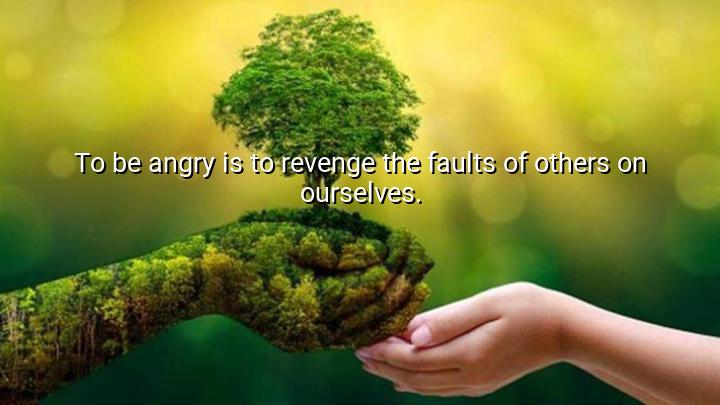




The quote by Alexander Pope — "To be angry is to revenge the faults of others on ourselves." — speaks to the self-destructive nature of anger. Pope suggests that when we become angry, we are essentially punishing ourselves for the mistakes or wrongdoings of others. Anger may feel like a reaction to an injustice, but in reality, it only harms the person who feels it, rather than the one who caused the offense. By holding on to anger, we allow the actions of others to negatively affect our mental and emotional well-being.
Pope’s words point out that anger is often a misguided form of revenge. Instead of addressing the source of our frustration in a productive way, we internalize the negative emotions, allowing them to fester and cloud our judgment. The person who provoked our anger may never even be affected by our emotional response, yet we bear the full brunt of the stress, hurt, and resentment it causes within ourselves.
This idea reflects the notion that forgiveness and self-control are healthier alternatives to holding onto anger. Rather than allowing anger to control us, Pope implies that we should focus on freeing ourselves from its grip. Forgiveness not only releases the other person from blame but also frees us from the emotional toll that anger exacts on our lives.
Ultimately, Pope’s quote serves as a cautionary reminder that anger is not a productive response to the mistakes of others. Instead of allowing it to consume us, we must recognize that resentment and revenge are forms of self-punishment. By choosing to let go of anger, we take back control of our emotional state and preserve our peace and well-being.

THYen Oanh Tran Hoang
This quote highlights a paradox: in reacting angrily to others’ faults, we become our own victims. How can this understanding motivate someone to seek healthier emotional responses? Does it mean that forgiveness is more about self-care than about absolving others? I’d be interested in perspectives on how this insight applies to managing anger in family or workplace conflicts.
MKTran minh khoa
Reading this, I wonder how cultural attitudes toward anger shape our tendency to internalize pain caused by others. Are some cultures more prone to this self-directed anger? Also, how does this affect mental health over time? This quote encourages a dialogue about balancing justice and compassion for ourselves in the face of others’ faults.
TThao
The idea that anger is ‘revenge’ on ourselves for others’ mistakes makes me think about the psychological mechanisms behind resentment. Is this form of self-punishment conscious or subconscious? How can therapy or mindfulness help people break this cycle? I’d be interested in exploring how this quote relates to the concept of emotional boundaries and letting go of toxic feelings.
VVy
I find this quote profound because it suggests anger is a way we internalize others’ faults, to our own detriment. How might this insight change the way we approach emotional regulation? Does it imply that controlling anger is not just for others’ sake but primarily for our own well-being? It raises questions about how self-awareness can mitigate unnecessary suffering caused by anger.
TT.MINh
This statement challenges the common instinct to blame others for our anger by highlighting how we actually hurt ourselves in the process. I’m curious about how this idea can influence conflict resolution—does understanding this dynamic help people forgive or move on? Also, could this perspective encourage healthier emotional habits and reduce grudges in personal relationships?