

Many people have trouble with forgiveness because they have been taught it is a singular act to be completed in one sitting. That is not so. Forgiveness has many layers, many seasons.
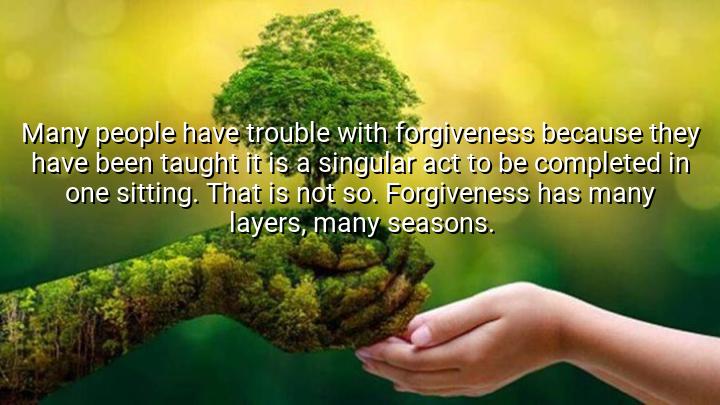




In this quote, Clarissa Pinkola Estés, a renowned psychoanalyst and author, offers a deeper understanding of the concept of forgiveness. She challenges the common belief that forgiveness is a one-time, singular act that can be completed in a single moment. Estés suggests that forgiveness is not as simple as an immediate decision; instead, it is a process that unfolds over time, involving multiple layers and stages of emotional healing.
Estés likens forgiveness to a journey that requires patience, understanding, and emotional growth. She highlights that it is a gradual process that takes time, often requiring individuals to revisit their emotions and experiences repeatedly. The idea that forgiveness has many layers means that it involves addressing different aspects of pain, hurt, and understanding, which can take years to fully process.
The mention of seasons in the quote symbolizes the cyclical nature of forgiveness. Just as the seasons change and bring new perspectives, so too can one's capacity for forgiveness evolve over time. This suggests that forgiveness is not linear, and there may be periods where one feels ready to forgive and other times when they may need more time or space to heal. Healing and forgiving are ongoing processes that reflect growth in understanding and emotional strength.
Ultimately, Estés is teaching that forgiveness should not be rushed or reduced to a quick resolution. It is a complex, layered experience that requires deep reflection and self-compassion. Her perspective encourages individuals to be patient with themselves as they move through the stages of forgiveness, allowing them to find true emotional peace rather than forcing a resolution too quickly.

AAdministratorAdministrator
Welcome, honored guests. Please leave a comment, we will respond soon