

The weak can never forgive. Forgiveness is the attribute of the strong.
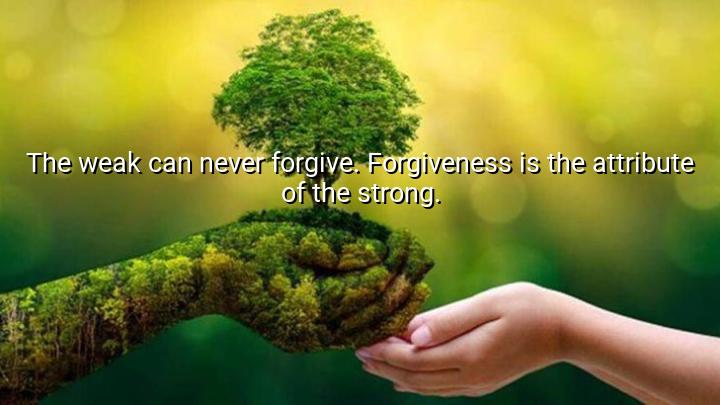




In this quote, Mahatma Gandhi makes a powerful statement about the nature of forgiveness and its connection to strength. Gandhi suggests that forgiveness is not a sign of weakness, but rather a sign of inner strength. He argues that only those who possess true strength can offer forgiveness, as it requires the ability to overcome anger, resentment, and the desire for revenge. It takes a strong person to let go of hurt and choose peace over continued conflict.
Gandhi’s perspective on forgiveness challenges common perceptions. Often, forgiveness is seen as something that the victim does for the benefit of the wrongdoer, but Gandhi reframes it as an act that empowers the person offering it. Forgiveness requires courage and the ability to rise above the pain caused by others. It involves making a conscious decision to release the negative emotions that come with being wronged, which in turn fosters emotional freedom and healing.
The quote also highlights the moral philosophy that guided Gandhi’s life, especially in his work for Indian independence and his advocacy for nonviolence. His commitment to nonviolent resistance was rooted in the belief that only love and forgiveness could truly break the cycle of hatred and oppression. For Gandhi, true strength came not from domination or force, but from the ability to endure suffering with grace and to respond to violence with peace.
Ultimately, Gandhi’s quote teaches that forgiveness is a powerful tool that requires personal strength and emotional resilience. It encourages us to recognize that forgiving others is not a sign of weakness but rather a mark of true strength, as it allows us to move forward without being held hostage by past wrongs.

AAdministratorAdministrator
Welcome, honored guests. Please leave a comment, we will respond soon