

Rules and models destroy genius and art.
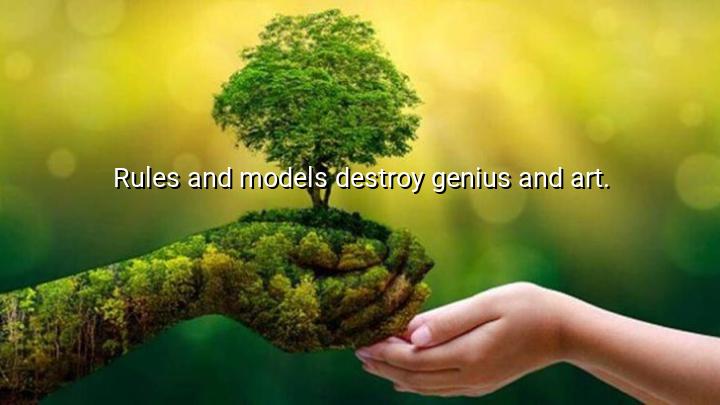




The quote "Rules and models destroy genius and art" by William Hazlitt suggests that rigid structures and predefined standards stifle creativity and originality. Hazlitt argues that when artists are confined to following rules or imitating models, they cannot fully express their genius or produce art that is truly innovative. The imposition of conventional norms limits the artist’s ability to explore new ideas and express their unique vision, leading to works that may be technically sound but lack true creativity or emotional depth.
Hazlitt, a 19th-century English writer and philosopher, was an advocate for individual expression and freedom of thought. He believed that true art comes from the artist’s innate abilities and personal interpretation, not from following established formulas. His critique of rules and models reflects his broader view that artistic and intellectual achievements are best nurtured in environments that allow for freedom, experimentation, and spontaneity.
The origin of this quote comes from Hazlitt’s philosophical reflections on creativity and the nature of genius. He often expressed disdain for the mechanical imitation of previous works, whether in art, literature, or other forms of creative expression. For Hazlitt, the true power of art lay in the artist’s ability to break free from constraints and discover something new, which he felt was impossible if bound by rules or confined to conventional models.
For artists, this quote serves as a reminder to resist the temptation to simply follow trends or replicate past successes. Hazlitt’s words encourage them to trust their own instincts and embrace the freedom to innovate, even if it means stepping outside traditional boundaries. It emphasizes the importance of originality in the creative process, highlighting that genius and art can only thrive in an environment where individuality and boldness are celebrated.

Q922.nguyen thi Kim quyen 9a4
This makes me reflect on how often great innovations in art, music, and literature come from breaking the mold. But doesn’t genius sometimes emerge from working creatively within constraints? Shakespeare wrote sonnets with strict rules, and yet they're masterpieces. So is it fair to say rules destroy genius, or does the genius lie in knowing how—and when—to break them? I’d love to hear how modern artists interpret this tension.
VHVu Hoang
I find this quote thrilling but also kind of intimidating. If rules and models destroy genius, does that mean I have to reinvent everything from scratch to be a ‘real’ artist? That feels overwhelming. Maybe Hazlitt is really talking about mindset—the importance of questioning authority and thinking independently. But it raises the question: can you be both disciplined and original, or are those two forces always at odds?
MHThi Mai Hoang
This quote really speaks to the rebellious spirit in art. But I’m curious—if genius ignores rules, what keeps it from descending into chaos? Isn’t some form of order necessary for art to communicate, to resonate? Hazlitt seems to romanticize complete freedom, but I wonder if even the most avant-garde creators work within personal or internal systems, even if they reject external ones.
LTMy Linh Le Thi
Hazlitt’s perspective makes me think about how we teach art and creativity in schools. If we push students to follow models and templates too closely, are we killing their originality before it even develops? At the same time, some structure helps young artists build confidence. So how do we teach the craft without suffocating the spark? Can genius thrive in a classroom, or must it always rebel against it?
TMTran Thi Mai
This quote feels a bit extreme. Are all rules inherently destructive to art, or is it about how they’re applied? For instance, many great artists mastered traditional forms before breaking them. Doesn’t that suggest rules can be a stepping stone to innovation? Maybe it’s not rules that destroy genius, but blind obedience to them. Still, it makes me question how much structure is too much in creative education.