

The love of liberty is the love of others; the love of power is the love of ourselves.
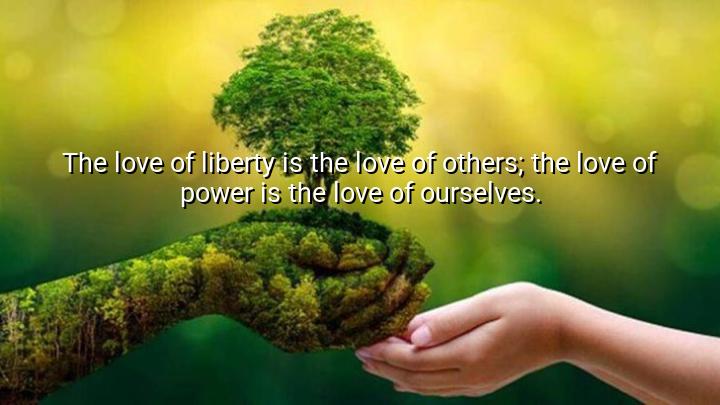




The quote, "The love of liberty is the love of others; the love of power is the love of ourselves," by William Hazlitt, explores the connection between motivation, ethics, and human behavior. Hazlitt suggests that those who truly value freedom are motivated by compassion, fairness, and concern for the well-being of others. In contrast, the desire for power often stems from self-interest and ego, reflecting a focus on personal gain rather than collective good.
The origin of this quote comes from William Hazlitt, a 19th-century English essayist, critic, and philosopher known for his incisive observations on human nature, society, and morality. Hazlitt frequently examined the ethical dimensions of behavior, emphasizing the difference between selfless and selfish impulses. By contrasting love of liberty with love of power, he highlights how motivation shapes character and action, and how true virtue is aligned with concern for others.
On a deeper level, the quote reflects how values influence relationships and society. Those who cherish liberty prioritize justice, cooperation, and empathy, seeking to create environments where everyone can flourish. In contrast, the pursuit of power often leads to domination, conflict, and self-centeredness, which can erode trust and community. Hazlitt’s insight reminds us that genuine love and ethical action are outward-focused, while selfish desires are inward-focused.
Ultimately, "The love of liberty is the love of others; the love of power is the love of ourselves" serves as a timeless reminder that true virtue lies in caring for others and valuing freedom. William Hazlitt’s words encourage individuals to examine their motivations, showing that ethical living and meaningful connections are rooted in selflessness, empathy, and respect for the liberty of others.
I can also create a concise, memorable version suitable for a social media post or quote card if you want.

AAdministratorAdministrator
Welcome, honored guests. Please leave a comment, we will respond soon