

Every creator painfully experiences the chasm between his inner vision and its ultimate expression.
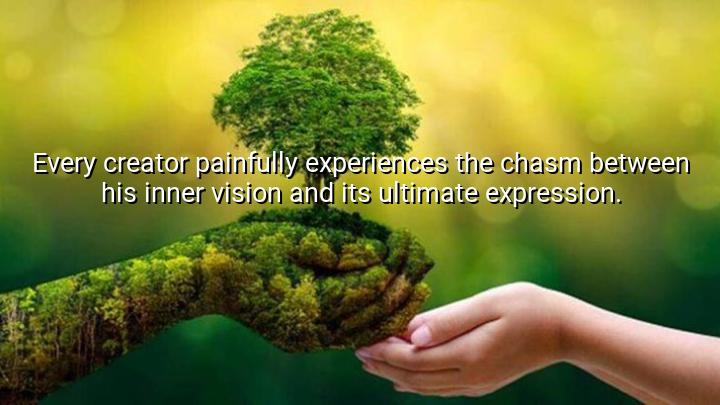




The quote "Every creator painfully experiences the chasm between his inner vision and its ultimate expression" by Isaac Bashevis Singer highlights the inherent struggle that creators—whether artists, writers, or any type of innovator—face in bringing their inner thoughts, feelings, and ideas into tangible form. Singer emphasizes the gap or disconnect that often exists between the idealized vision in the creator’s mind and the final product they are able to produce. This chasm can be a source of frustration, as the creator feels they cannot perfectly express what they envision.
Singer, a Nobel Prize-winning author, understood the complexities of creativity and the emotional toll it takes on the artist. His quote reflects the idea that the process of creating is filled with challenges and limitations, where the artist is often confronted with the difficult reality that their skills or the medium they work in may not fully capture their original vision. This tension between intention and execution is central to the creative process and is something all creators must navigate.
The origin of this quote stems from Singer’s own experience as a writer, where he often grappled with the limitations of language and storytelling to express deep, complex ideas. He understood that part of being a creator is learning to accept the imperfections of one’s work and the constant struggle to bridge the gap between thought and finished piece. For Singer, this challenge was an essential part of the creative journey.
For artists and creators, this quote serves as a reminder that the creative process is rarely smooth or easy. The pain of facing this chasm is part of the journey, and it is often through this struggle that the work takes shape. It encourages creators to embrace the imperfections in their work and to recognize that the journey of creation—despite its frustrations—is what ultimately leads to personal and artistic growth.

UGUser Google
This quote makes me reflect on the emotional toll of creativity. The phrase 'painfully experiences' really stands out—it suggests that this gap isn’t just technical, but psychological. How do artists protect their mental health when the work they produce never quite lives up to their inner ideal? I’d love to hear how other creators cope with this—whether through acceptance, iteration, or letting go.
NHThi Nguyet Ho
Singer's observation touches on something both tragic and profound. It feels like a form of existential isolation—our truest ideas may never fully escape the mind. Does this mean that every masterpiece is, in fact, a compromise? And if so, how do we find peace with that reality? Is the act of creating still worthwhile when it’s doomed to fall short of its imagined perfection?
TNthanh nguyen
What I like about this quote is that it validates the struggle of creating. It’s comforting to know that even the greats wrestle with expressing what they envision. But it also makes me question—if there’s always a chasm between vision and expression, is perfection in art a myth? Should we redefine success in creativity, not by accuracy but by impact or resonance with others?
BDGia Bao Dao
This speaks to a deeply human struggle—trying to externalize something internal with perfect fidelity. It makes me wonder: is that gap ever bridgeable, or is art simply the process of trying to narrow the distance? Maybe the beauty lies in the attempt, not the outcome. Still, I often wonder how creators maintain motivation when they know the final product will never quite match the original inspiration.
VCViet Ca
I find this quote incredibly relatable as someone who dabbles in writing. No matter how vivid or perfect the idea is in my mind, it never fully translates onto the page. There’s always something missing, and it’s frustrating. Do all artists feel this way, no matter how accomplished they become? Or is it just part of the creative process that we learn to live with rather than ever completely solve?