

The very essence of literature is the war between emotion and intellect, between life and death. When literature becomes too intellectual - when it begins to ignore the passions, the emotions - it becomes sterile, silly, and actually without substance.
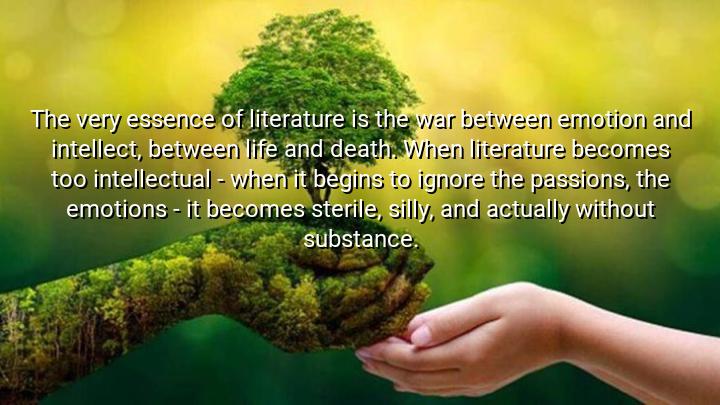




Isaac Bashevis Singer’s quote, "The very essence of literature is the war between emotion and intellect, between life and death," explores the dynamic tension that defines meaningful literary works. Singer argues that literature exists in a delicate balance between rational thought and emotional expression. The intellect provides structure, logic, and analysis, while emotion introduces depth, passion, and human experience. This duality, he suggests, is what gives literature its vibrancy and relevance, as it reflects the complex nature of human existence.
Singer goes on to warn that when literature becomes too intellectual, it risks losing its connection to the human experience. He argues that if writing begins to neglect the passions and emotions that drive people, it becomes detached from real life. In this state, literature can become sterile and devoid of the vitality that makes it meaningful and compelling. By focusing too much on intellect and reason, literature may miss the raw, visceral truths that come from emotional and instinctual responses to life’s challenges and joys.
As a writer who often explored themes of human suffering, faith, and the complexities of the Jewish experience, Singer was deeply concerned with the emotional core of storytelling. His works, which blend philosophical reflection with deep emotional engagement, embody the very tension he describes in this quote. For Singer, literature that does not address the full spectrum of human emotions and life experiences is incomplete, reducing its ability to connect with readers on a profound level.
The origin of this quote reflects Singer’s own literary philosophy. Having written extensively in both Yiddish and English, his works often examined the interplay between intellect and spirit. His perspective on literature underscores his belief in the importance of balancing rational thought with deep emotional and existential reflection. This quote serves as a reminder that the power of literature lies in its ability to engage both the mind and the heart, making it a dynamic force that speaks to the complexity of human existence.

AAdministratorAdministrator
Welcome, honored guests. Please leave a comment, we will respond soon