

I did not become a vegetarian for my health, I did it for the health of the chickens.
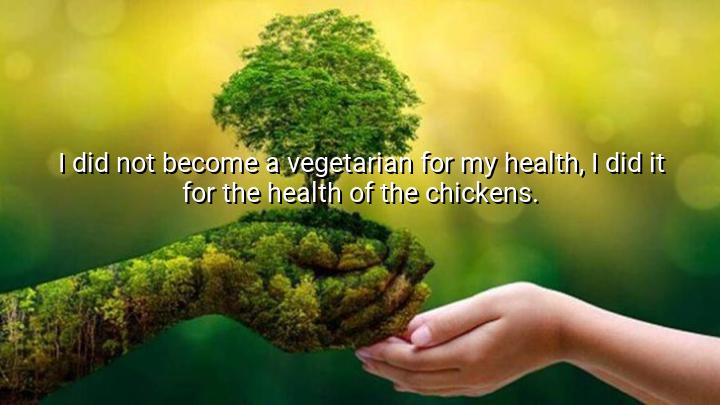




The quote by Isaac Bashevis Singer, "I did not become a vegetarian for my health, I did it for the health of the chickens," highlights his motivation for adopting a vegetarian lifestyle, which was not driven by personal health concerns but by a deep sense of compassion and ethics toward animals. Singer’s statement underscores that his choice was made out of respect for the well-being of animals, particularly chickens, and the belief that animals should not suffer for human consumption. His perspective challenges the common notion that vegetarianism is only about individual health benefits.
Singer’s quote also reflects his broader philosophy on animal rights and the ethical treatment of living beings. By focusing on the health of the chickens, he highlights the cruelty that can be involved in factory farming and the exploitation of animals for food. This aligns with his advocacy for compassionate living, where individuals choose not to participate in systems that harm animals for human gain.
The quote emphasizes that ethical decisions, such as choosing a vegetarian diet, can be rooted in moral considerations beyond self-interest. Singer’s choice to forgo meat, particularly not for personal health but for animal welfare, encourages people to think about the broader impact of their dietary choices on the world around them. It's a call to consider the suffering that animals endure in the food industry, urging a shift in perspective toward more humane and ethical practices.
Originating from Isaac Bashevis Singer, a Nobel Prize-winning author and a prominent advocate for animal rights, this quote reflects his commitment to ethics and compassion in both his writing and personal life. Singer was known for exploring themes of moral responsibility and humanity's relationship with animals in his works. His choice to speak out about vegetarianism as a form of ethical resistance became a significant part of his advocacy for the well-being of animals.

AAdministratorAdministrator
Welcome, honored guests. Please leave a comment, we will respond soon