

Beware of him that is slow to anger; for when it is long coming, it is the stronger when it comes, and the longer kept. Abused patience turns to fury.
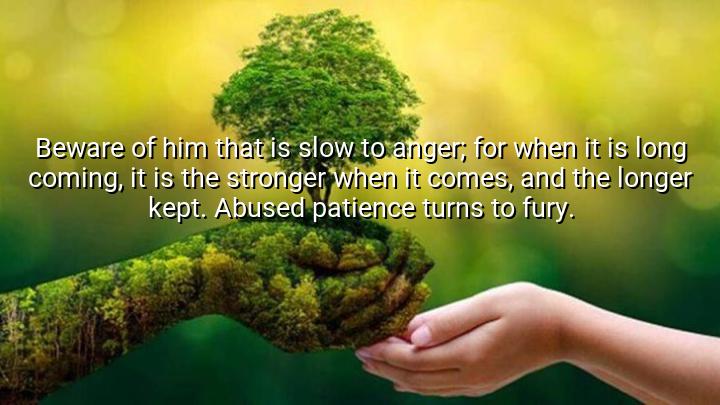




The quote by Francis Quarles — "Beware of him that is slow to anger; for when it is long coming, it is the stronger when it comes, and the longer kept. Abused patience turns to fury." — speaks to the danger of pushing someone’s patience too far. Quarles suggests that individuals who are typically calm and slow to become angry may, when their anger finally surfaces, exhibit a much stronger and more intense reaction. The longer a person tolerates frustration or mistreatment without expressing their emotions, the more powerful their eventual response becomes.
The quote highlights the concept of emotional buildup — when a person holds back their anger for too long, it accumulates and intensifies. Quarles warns that this kind of delayed anger can be more destructive than immediate emotional outbursts, as it has been simmering beneath the surface. The fury that results from abused patience is often disproportionate to the original cause, making it all the more dangerous and difficult to manage.
Quarles' perspective reflects the psychological understanding that prolonged suppression of negative emotions can lead to eventual explosions of intense feelings. In this case, patience, when repeatedly tested or abused, can morph into fury, as the individual has reached their limit. This warning advises against pushing someone’s patience too far, as the consequences of doing so can be far more damaging than a timely, controlled expression of anger.
Ultimately, Quarles’ quote emphasizes the importance of addressing emotional issues before they build to an overwhelming point. It suggests that anger should not be repressed indefinitely and that individuals should be mindful of how they treat others' patience. By managing anger and addressing frustrations before they escalate, we can prevent the destructive power of fury from taking hold.

NVThuy Nhu Vi
This quote suggests that patience can be both a strength and a risk. How do people balance enduring difficulties with the risk of internalizing anger until it becomes overwhelming? Can therapy or mindfulness help manage this ‘slow burn’ of anger? It’s a reminder that emotional regulation isn’t just about suppressing feelings, but understanding and releasing them in healthy ways.
TLThanh thao Lam
Quarles’ observation raises questions about emotional health. Is it better to express anger quickly and honestly, or is slow patience a virtue that just needs boundaries? How do we prevent patience from becoming ‘abused’ in personal or professional contexts? It seems like this quote advocates for awareness of both our own limits and the limits of those around us.
CTCao Trang
Reading this, I’m struck by the power of controlled anger and how it can become explosive if ignored. Does this mean that those who are slow to anger might be more dangerous emotionally than those who react quickly? How do we approach such individuals—do we try to understand and address their suppressed feelings before they erupt? It’s an interesting paradox about patience and power.
HTNguyen Sy Huy Tuan
The idea that ‘abused patience turns to fury’ resonates deeply with me. It suggests a tipping point where kindness or tolerance becomes frustration and rage. How can we teach people to balance patience with assertiveness? Are there warning signs that someone’s patience is nearing its limit? This quote makes me think about conflict resolution and the importance of addressing issues early.
NH11-8C Tran Ngoc Han
This quote highlights the danger of holding in anger for too long. I’m curious about the psychological effects of suppressed anger—does it always explode eventually, or can it be managed? How do cultural or personal differences influence how people deal with slow-building anger? It raises important questions about emotional expression and communication in relationships.