

Let the fear of danger be a spur to prevent it; he that fears not, gives advantage to the danger.
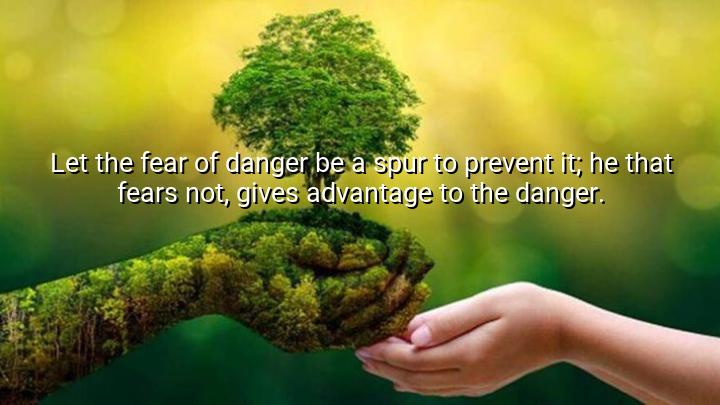




The quote by Francis Quarles, "Let the fear of danger be a spur to prevent it; he that fears not, gives advantage to the danger," emphasizes the constructive role that fear can play in helping us avoid harm. Quarles suggests that fear should not be something to suppress or ignore; rather, it should serve as a motivating force—a warning signal that prompts caution and proactive action to prevent potential dangers. Conversely, those who lack fear may be reckless, inadvertently giving an advantage to the very threats they underestimate.
Francis Quarles was a 17th-century English poet known for his religious and moral writings. His quote reflects a practical and ethical view of fear, portraying it as a natural and beneficial emotion that can guide wise decision-making. Quarles recognizes that fear, when properly channeled, becomes a tool for self-preservation and prudent behavior.
The quote also addresses the balance between fear and courage. While excessive fear can be paralyzing, a healthy fear helps us stay alert and prepare for challenges. By warning against fearlessness in the face of danger, Quarles highlights the risks of ignoring potential threats and acting without due care.
In essence, Francis Quarles’ words remind us that fear has an important purpose: to spur us into preventing harm and making safe choices. This perspective encourages respect for fear as a natural protector rather than something to be avoided, fostering a mindful and cautious approach to life’s dangers.

AAdministratorAdministrator
Welcome, honored guests. Please leave a comment, we will respond soon