

We can easily forgive a child who is afraid of the dark; the real tragedy of life is when men are afraid of the light.
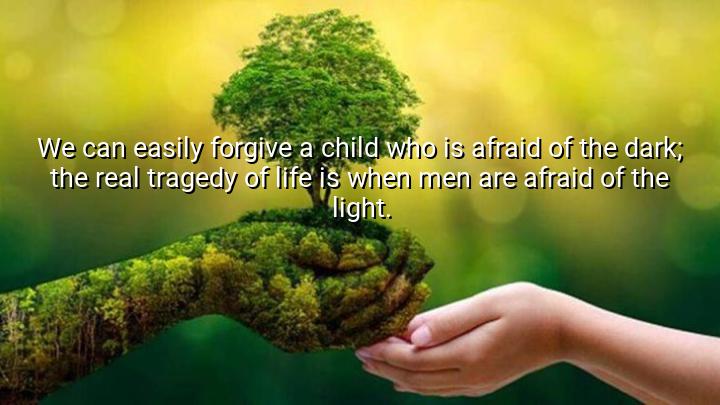




The quote by Plato uses the metaphor of darkness and light to explore themes of fear, ignorance, and knowledge. He suggests that it is natural and understandable to forgive a child who is afraid of the dark because fear of the unknown is part of innocence and learning. However, the real tragedy lies in adults who are afraid of the light, symbolizing truth, knowledge, and enlightenment.
Plato’s quote highlights the human tendency to resist growth and awareness even when presented with opportunities to learn and understand more about the world and themselves. The light represents clarity and insight that can challenge established beliefs or comfort zones, and fear of it leads to stagnation or willful ignorance.
The origin of this quote is rooted in Plato’s philosophical works, particularly the Allegory of the Cave from The Republic. In this allegory, prisoners in a cave fear the outside light because it reveals a reality they have never experienced, illustrating how people can fear enlightenment and prefer the familiar darkness of ignorance.
In essence, the quote encourages embracing knowledge and truth despite the discomfort it may bring. It serves as a reminder that the greatest obstacle to human progress is often the fear of facing reality and expanding one’s understanding.

AAdministratorAdministrator
Welcome, honored guests. Please leave a comment, we will respond soon