

If thou desire the love of God and man, be humble, for the proud heart, as it loves none but itself, is beloved of none but itself. Humility enforces where neither virtue, nor strength, nor reason can prevail.
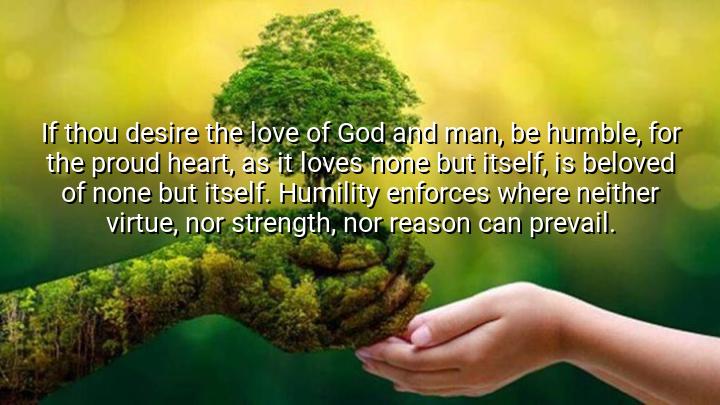




The quote "If thou desire the love of God and man, be humble, for the proud heart, as it loves none but itself, is beloved of none but itself. Humility enforces where neither virtue, nor strength, nor reason can prevail" by Francis Quarles emphasizes the power of humility in gaining the love and respect of both God and others. Quarles suggests that a proud and self-centered heart isolates itself, as it only cares about its own interests, whereas humility allows a person to connect with others and earn genuine love. He also points out that humility can accomplish what neither personal virtue, strength, nor reason can, making it a truly powerful trait.
The origin of this quote comes from Quarles, a 17th-century English poet and divine, whose works often reflected his Christian beliefs. In his writings, Quarles frequently explored the virtues of humility, selflessness, and the need for a person to align with God’s will. His perspective on humility was deeply rooted in the Christian tradition, where humility is seen as a central virtue that allows one to grow spiritually and earn favor from both God and fellow humans.
In this context, Quarles’ words contrast pride with humility—while the proud heart seeks only its own gain, the humble heart invites the love and favor of both God and those around them. The quote emphasizes that humility isn’t just a moral virtue; it has the practical power to open doors, foster relationships, and create unity where other forces might fail. The ability to serve and be open to others is, according to Quarles, more influential than strength or reason in building meaningful connections.
Ultimately, Quarles’ message encourages individuals to practice humility, both as a path to spiritual growth and as a way to foster deeper, more meaningful relationships with others. It suggests that true love—whether from God or people—comes not through power, pride, or intellect, but through the ability to humble oneself, recognize the worth of others, and act selflessly. Humility, therefore, becomes a key to unlocking the most significant and lasting forms of connection.

AAdministratorAdministrator
Welcome, honored guests. Please leave a comment, we will respond soon