

God has cared for these trees, saved them from drought, disease, avalanches, and a thousand tempests and floods. But he cannot save them from fools.
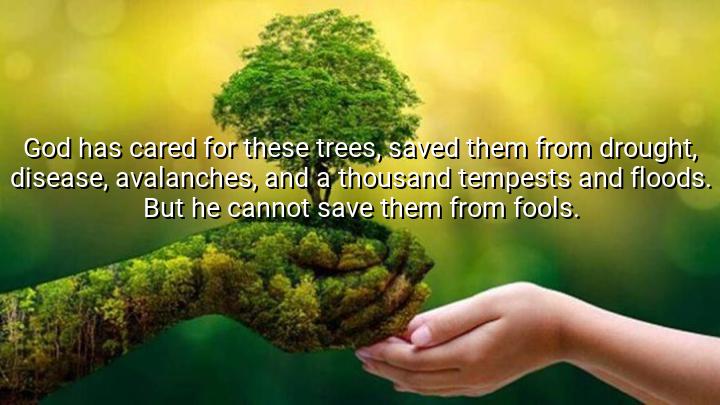




The quote by John Muir, "God has cared for these trees, saved them from drought, disease, avalanches, and a thousand tempests and floods. But he cannot save them from fools," underscores the delicate balance between nature and human intervention. Muir is reflecting on the resilience of trees and the natural world, which, despite facing countless natural disasters and challenges, have managed to survive and thrive through divine care. However, Muir laments that humans, in their ignorance or selfishness, can have a far more destructive impact on nature than any natural force. The "fools" he refers to represent those who harm the environment through irresponsible actions, such as deforestation, pollution, or neglect.
This statement speaks to Muir's belief in the sacredness and inherent value of nature. He acknowledges that while God provides the natural world with protection and sustenance, humans hold the power to cause irreparable harm. In this sense, Muir is calling for greater respect and awareness of nature's fragility, urging people to act responsibly in order to protect the environment for future generations. His words also highlight the irony of how human beings, despite being part of nature, often act as its most significant threat.
The origin of this quote comes from John Muir, a naturalist and environmentalist who was instrumental in the founding of the National Park system in the United States. Muir is widely known for his advocacy for the preservation of natural landscapes and his deep reverence for the divine in nature. He believed that nature was a reflection of God’s creation, and he spent much of his life working to ensure that pristine areas of land, such as Yosemite, were protected from human exploitation. This quote is a reflection of his deep conviction that humans must take responsibility for protecting the environment.
Ultimately, Muir's quote serves as a warning about the destructive power of human ignorance and greed. While nature is resilient and divinely protected, it remains vulnerable to the careless actions of humanity. Muir's words urge us to recognize our role as stewards of the earth, urging us to act with wisdom and care to preserve the beauty and health of the world for future generations.

AAdministratorAdministrator
Welcome, honored guests. Please leave a comment, we will respond soon