

God buries His workmen but carries on His work.
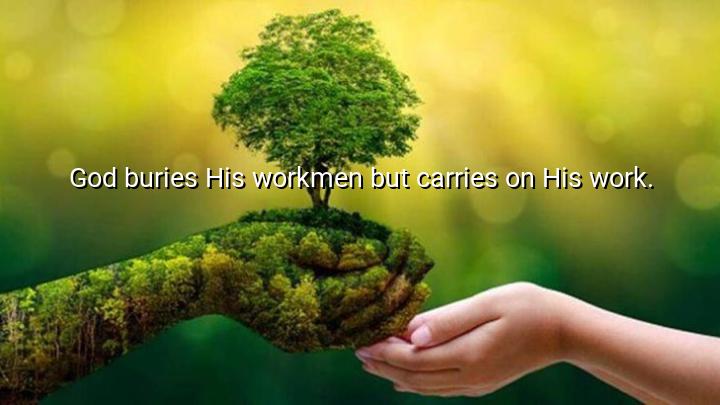




The quote by Charles Wesley, "God buries His workmen but carries on His work," reflects the idea that while human beings—even the most dedicated and faithful servants of God—are mortal and will eventually pass away, God's work continues indefinitely. Wesley suggests that God's divine purpose does not rely on any single individual; rather, it is part of a larger, ongoing plan that transcends human life and limitations. The work may be done through people, but the mission and divine plan persist long after an individual is gone.
Wesley’s words highlight the impermanence of human life and the eternal nature of God's mission. While workmen (representing individuals who serve God) may die, God’s work is not hindered by their departure. Instead, God's work is perpetual, continually moving forward, often with new individuals rising up to take on roles in His greater plan. This speaks to the resilience of divine purpose and the idea that, despite our own mortality, God's plan will always continue through others.
The origin of this quote comes from Charles Wesley, an English hymn writer and theologian who, along with his brother John Wesley, was a co-founder of the Methodist movement. Wesley was deeply committed to spreading the Christian faith and is best known for writing many hymns that are still sung today. His quote reflects his understanding of God's sovereignty and the continuity of divine work, even in the face of human death.
Ultimately, Wesley’s quote serves as a reminder of the eternity of God’s purpose and the humble recognition that individuals are temporary, but God's work endures. It encourages people to live with the understanding that their contributions are part of a larger, ongoing divine plan and that when one person’s time ends, others will continue to carry the work forward. It is a testament to the resilience of divine will, showing that God continues to carry out His purpose regardless of the human limitations of time.

AAdministratorAdministrator
Welcome, honored guests. Please leave a comment, we will respond soon