

Anger is energising. The opposite of anger is depression, which is anger turned inward.
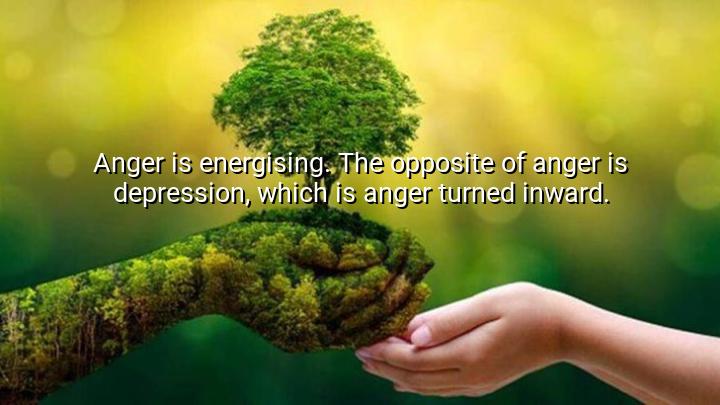




In this quote, Gloria Steinem highlights the energizing power of anger and contrasts it with the emotional state of depression, which she describes as anger turned inward. Steinem suggests that anger is a dynamic and motivating force, one that can drive individuals to take action and assert their needs or beliefs. When directed outward, anger can propel people to challenge injustices, fight for change, or express dissatisfaction. On the other hand, when anger is internalized or suppressed, it can transform into depression, a state of emotional stagnation and self-directed frustration.
Steinem's insight reveals the relationship between anger and depression, implying that anger, when repressed or misdirected, can lead to negative mental health outcomes. Rather than allowing anger to fester inwardly, which can lead to feelings of helplessness or hopelessness, Steinem advocates for confronting and expressing anger as a powerful means of regaining control and energy. The emotional energy that comes from anger can be the antidote to the paralysis that depression brings.
The origin of this quote comes from Steinem's advocacy for women's rights and gender equality, where she often emphasized the importance of anger as a tool for social change. As a leading figure in the feminist movement, Steinem recognized the need for women to reclaim their anger and use it as a source of strength in the fight against oppression. This perspective is grounded in her broader belief that emotional expression, particularly the acknowledgment of anger, is essential for empowerment and activism.
Ultimately, Steinem’s quote serves as a reminder that anger is not inherently negative. When used constructively, anger can provide the energy and motivation needed to confront personal or societal challenges. By understanding the potential dangers of internalizing anger and the value of expressing it, individuals can avoid the downward spiral into depression and instead harness anger as a positive, transformative force.

MT31. Minh Trang
The idea that anger can be energizing challenges the common negative perception of anger. How can individuals harness this energy to motivate change or personal growth? Conversely, what strategies help prevent anger from turning inward and causing depression? This duality shows the importance of emotional literacy and coping mechanisms.
HLVuong Ha Linh
Reading this, I’m curious about the gender dynamics involved—are women more prone to turning anger inward due to social conditioning? How does this impact rates of depression across genders? This quote invites a deeper look into how cultural expectations shape emotional expression and mental health outcomes.
VTLE VIET TAN
This perspective highlights how complex emotions are interconnected. If depression is anger turned inward, what are effective ways to safely redirect that energy outward? Could physical activity, creative expression, or activism serve as healthy outlets? It seems crucial to explore how emotional awareness can prevent destructive cycles of internalized anger.
NHNguyen Huynh
I find it intriguing that anger is seen as energizing while depression is framed as anger turned inward. Does this imply that managing anger constructively can improve mental health? How might this understanding shift therapeutic approaches to depression? It also prompts reflection on the stigma around anger and depression and how society responds differently to each emotion.
ALDuc Anh Le
This quote offers a powerful perspective on the relationship between anger and depression. It makes me wonder how often untreated anger might manifest as depression. Could acknowledging and expressing anger in healthy ways serve as a preventative measure against depression? It also raises questions about emotional regulation—how do we ensure anger energizes us positively rather than leading to harmful outcomes?