

We have to take our anger and rage and channel it into building, growing, loving, holding each other up.
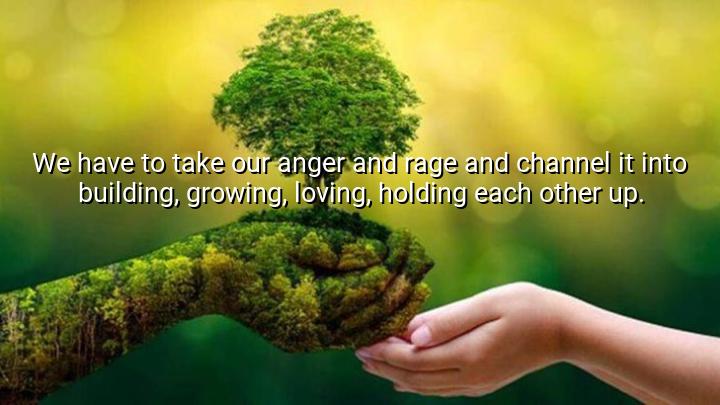




Pramila Jayapal’s quote emphasizes the importance of transforming anger and rage into positive, constructive actions. She acknowledges that these intense emotions are natural reactions to injustice and adversity but advocates for channeling them into efforts that promote growth, love, and support. Rather than letting anger fester or lead to destruction, Jayapal suggests redirecting it towards more productive and uplifting endeavors, such as building communities, fostering relationships, and working toward positive change.
The idea of channeling anger into building and growing reflects the belief that emotions like rage can serve as a powerful motivator when used for good. Jayapal encourages individuals to use the emotional energy from these feelings to work on things that improve society, such as creating better systems, fostering solidarity, and supporting one another through difficult times. By doing so, anger becomes a tool for progress rather than something that divides or harms.
Furthermore, Jayapal’s call to love and hold each other up underscores the importance of community and compassion. She is emphasizing that in times of tension and frustration, people should lean on each other, offering support and care, instead of allowing their anger to drive them apart. This approach highlights the power of emotional resilience and collective action in overcoming challenges.
Ultimately, Jayapal’s quote encourages a shift in mindset—recognizing the intensity of emotions like anger but choosing to use them in ways that strengthen rather than divide. It’s a call to take negative emotions and turn them into a force for good, reminding us that even in difficult times, love and mutual support can pave the way for positive change.

KGLe Hoang Khanh Giang
This statement resonates deeply, especially in today’s polarized climate. But I have to ask—what does 'holding each other up' look like in practical terms? Does it mean policy change, community organizing, personal empathy? I love the idea of channeling negative energy, but I’m curious how that works when people are exhausted, traumatized, or feel unheard. Where do we even begin in communities that are already fractured?
PMPhuoc Mai
I find this quote incredibly inspiring—it reminds me of movements like Black Lives Matter, where raw emotion was channeled into protest, art, education, and policy. Still, I wonder: what prevents that energy from fading over time? Is there a sustainable model for maintaining that constructive fire long-term without burnout? Passion is powerful, but how do we keep it productive and nurturing after the adrenaline wears off?
PLPhuong Le
This is beautiful and all, but does it risk sounding too soft? Some issues require confrontation, not just holding each other up. I agree we need to love and build, but sometimes I feel like too much emphasis is put on civility when real change might require disruption. How do we strike a balance between healing and demanding justice without losing momentum or compassion along the way?
TTTa Tran Thanh Thanh
I really appreciate the sentiment here, but I’m struggling to apply it in the face of injustice. When systems fail repeatedly, how do you resist the urge to stay angry or lash out? Is it fair to ask marginalized communities to always rise above and build when they’re constantly under pressure? This quote feels empowering, but also asks a lot. Shouldn’t there also be space for righteous outrage?
HNViet hoang Nguyen
This quote gives me hope, but it also makes me wonder—how do you actually transform rage into something positive without suppressing it or letting it explode? Are there structured ways to do this through activism, art, or community work? I’d love to hear real-life examples of people or movements that have succeeded in converting intense emotions into constructive outcomes. Otherwise, it feels a bit idealistic without a roadmap.