

To me, it's OK to have differences. But we don't have to be mad about it. You know? And I think that's where sometimes we get so passionate that we - you know, it turns into anger.
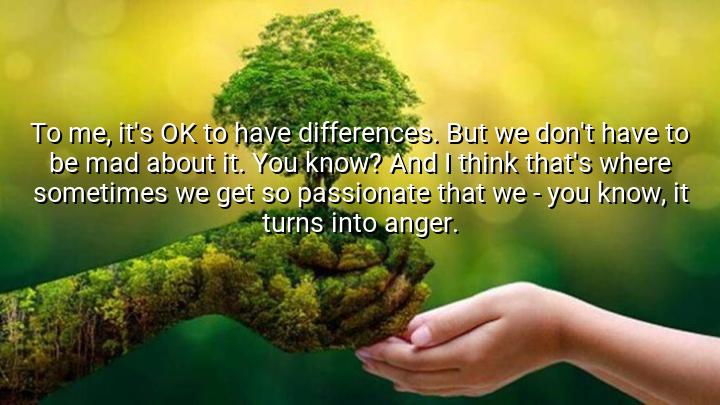




Joel Osteen’s quote emphasizes the importance of respecting differences in opinions, beliefs, and perspectives without allowing them to lead to anger. Osteen suggests that while it is natural to have varying views, it is essential not to let those differences turn into negative emotions like anger. He highlights that passion for a topic can easily escalate into frustration or anger if not handled with patience and understanding, leading to unnecessary conflict.
The quote also reflects Osteen’s message of maintaining peace and emotional control. Instead of letting disagreements turn into personal battles, he advocates for a more measured approach, where differences can be acknowledged and discussed calmly. This perspective aligns with Osteen’s broader teachings on positivity and fostering harmony, emphasizing the value of emotional balance and constructive dialogue.
Osteen’s comment about passion turning into anger highlights a key aspect of human interactions—emotions can quickly intensify, particularly when we feel strongly about an issue. However, he suggests that it is possible to stay calm and avoid the destructive force of anger by managing how we engage with others. By recognizing when our emotions are tipping into anger, we can pause and choose a more peaceful, respectful response.
Ultimately, Osteen’s quote encourages us to embrace diversity of thought and to engage in conversations and disagreements without letting anger cloud our judgment or relationships. His approach calls for a focus on understanding and respect, even in the face of disagreement, and for managing our emotions in a way that fosters connection rather than division.

VCVu van cuong
Joel Osteen’s words suggest that anger isn’t inevitable when faced with differences, which is hopeful. How might cultural norms influence whether people respond with anger or acceptance? Are there communities or traditions that excel at embracing difference without conflict? Understanding these dynamics could offer valuable lessons for fostering peace in diverse societies.
GHnguyen gia huy
This quote prompts reflection on how quickly passion can turn into anger, sometimes unintentionally. What role does self-awareness play in catching that shift early? Could mindfulness or communication training help people express strong feelings without damaging relationships? Osteen’s perspective encourages a thoughtful approach to managing emotional intensity.
PTNguyen Phuong Thao
I appreciate the emphasis on not needing to be ‘mad’ about differences. But is it realistic to expect people to always avoid anger when facing deeply held convictions or injustices? How can we balance genuine passion for change with emotional control? This makes me reflect on the role of emotional intelligence in activism and everyday interactions.
NKNguyen Viet Nam Khanh
Osteen’s idea that differences are okay but anger is avoidable raises important questions about conflict resolution. How do we teach younger generations to handle disagreement constructively? Does society reward or punish emotional restraint? It seems like cultivating patience and understanding could reduce unnecessary anger and foster healthier relationships across divides.
BN21-Tran Hoai Bao Ngoc-7TH2
This quote makes me think about the fine line between passion and anger. When does passionate advocacy become counterproductive? Could recognizing our own emotional triggers help prevent escalation? I’d love to explore techniques people use to maintain calm and openness while standing firm on their views, especially in contentious environments like politics or social media.