

I'm not for gay marriage, but I'm not for discriminating against people.
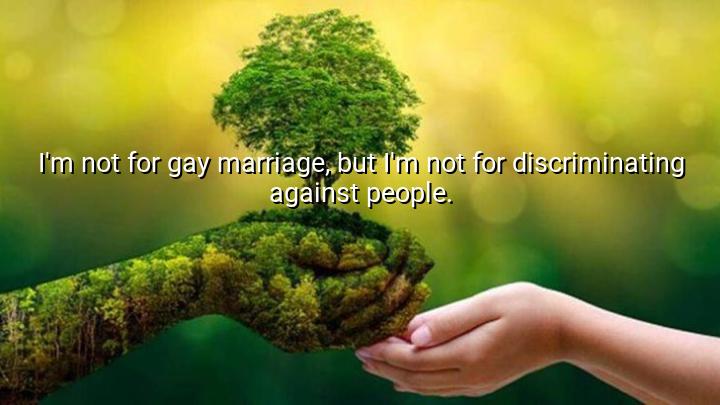




Joel Osteen’s quote presents a complex stance on the issue of gay marriage. In it, he acknowledges that he is not personally in favor of gay marriage, but he also emphasizes that he does not support discriminating against individuals based on their sexual orientation. This reflects a nuanced position, one that balances personal belief with a call for tolerance and respect for others.
Osteen, a prominent pastor and televangelist, has been known for advocating a message of love, acceptance, and positivity. While he holds traditional Christian views on marriage, particularly regarding the union between a man and a woman, his statement underscores the importance of treating all individuals with dignity, regardless of their sexual identity. His approach suggests that while people may hold differing personal beliefs, these should not lead to mistreatment or prejudice against others.
The quote reflects a broader societal debate between personal conviction and human rights. It shows the tension between adhering to religious or personal views on marriage and advocating for the rights and freedoms of LGBTQ+ individuals. Osteen’s words resonate with those who believe in the importance of upholding civil rights without compromising individual belief systems.
In a way, Osteen’s statement could also be seen as an attempt to bridge a divide between two opposing viewpoints. While he maintains his stance on marriage, his refusal to endorse discrimination highlights a desire for unity and respect among people of differing beliefs. The quote thus serves as an expression of the struggle many face when trying to reconcile personal beliefs with broader societal issues like equality and tolerance.

AAdministratorAdministrator
Welcome, honored guests. Please leave a comment, we will respond soon