

The principle of art is to pause, not bypass.
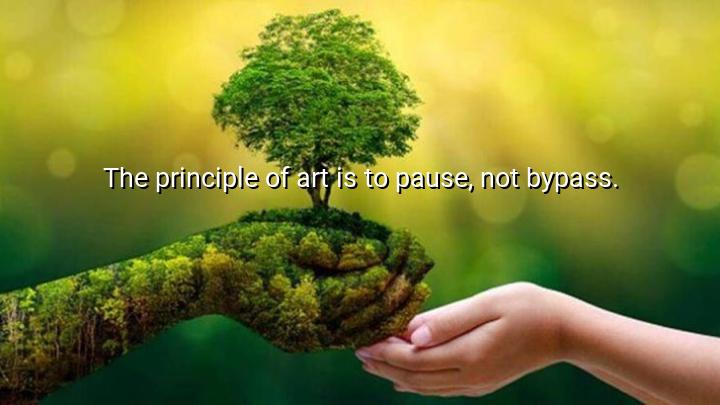




The quote "The principle of art is to pause, not bypass" by Jerzy Kosinski emphasizes the importance of reflection and introspection in the creative process. Kosinski suggests that art requires a deep engagement with the subject, an ability to pause and carefully consider each aspect, rather than rushing through or avoiding important details. In his view, art should be about taking time to absorb and explore, allowing space for understanding and connection, rather than bypassing the essential steps of creation and thought.
Kosinski, a novelist known for his psychological and philosophical themes, often explored the complexities of human experience. His quote reflects a broader philosophy that values contemplation over impulsiveness. The idea of pausing encourages artists to slow down, reconsider, and refine their work rather than hastily completing it. This pause allows the artist to be more intentional, deliberate, and aware of the emotions or ideas they are trying to express.
The origin of this quote lies in Kosinski's own views on creativity and the process of artistic expression. As a writer, he recognized that the true essence of art is found in the act of engagement with the material, where artists allow themselves time to reflect, revise, and deepen their understanding. Rather than rushing through the creative process, Kosinski valued the moments of pause as essential to achieving meaningful work.
For artists, this quote encourages them to embrace the act of pausing, whether it's during the initial stages of creation or while revising and refining their work. It highlights the importance of taking the time to thoughtfully engage with the creative process, allowing for reflection and the careful crafting of ideas. Kosinski’s words remind us that sometimes the greatest artistic discoveries come in the moments of stillness and deliberation.

DHNguyen Dinh Hung
There’s something deeply meditative about this quote. It reminds me of how I feel when I encounter a truly moving painting or poem—time seems to stop. Could this idea of ‘pause’ be linked to the therapeutic power of art? If so, what role might it play in education or mental health? I’d love to hear perspectives from art therapists or educators on how this principle shapes their work.
NNguyen
Is Kosinski calling out not just viewers but also creators? The idea that art should encourage pause rather than bypass might imply that artists have a responsibility to create work that evokes contemplation. But how can one do that in a world constantly vying for attention? Is subtlety still effective, or must art become more provocative just to get that initial pause?
DTDo duyen the
This quote almost feels like a quiet rebellion against modern life. Everything is about speed, efficiency, and productivity—but art refuses to play by those rules. It demands a moment of reverence. Do you think this principle applies to all art forms equally? For instance, can fast-paced music or performance art still embody the same spirit of making us pause internally, even if the medium itself moves quickly?
KD10. Duong Thi Kim Dao
I love how this statement frames art not as an escape, but as an invitation to stillness and attention. It makes me question how often I actually let myself be still in front of a piece of art. Do artists consciously create with the intent of forcing this pause? And if so, what techniques—visual, narrative, or emotional—do they use to resist the viewer's instinct to move on too quickly?
KKBui Thi Kim Khanh
This quote made me stop and really think about how we interact with art. Is Kosinski suggesting that the true value of art lies in its ability to make us slow down and reflect? In today's world of constant scrolling and instant gratification, that's a powerful statement. I wonder, has our digital age made it harder for people to truly experience art the way it’s meant to be experienced—by pausing with it?