

Sometimes we equate anger to destructive physical violence, but anger need not be martial.
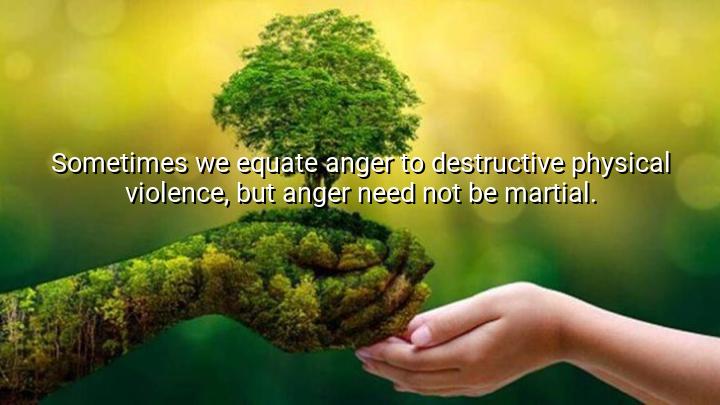




Kamal Haasan's quote challenges the common perception that anger inevitably leads to destructive physical violence. He suggests that anger does not always have to manifest in violent or martial actions, pointing out that anger is a complex emotion that can be expressed in many ways, not just through physical aggression. Haasan encourages a broader understanding of anger, one that recognizes its potential for both constructive and destructive outcomes depending on how it is channeled.
By saying "anger need not be martial," Haasan emphasizes that the emotion can be redirected and used in non-violent ways. Instead of letting anger lead to physical harm or conflict, it can be channeled into other forms of expression, such as creative work, peaceful protest, or even personal growth. This distinction allows for a more nuanced approach to dealing with difficult emotions and acknowledges that the energy from anger can be transformed into something positive.
The quote also reflects Haasan’s belief in the importance of self-control and emotional intelligence. He implies that people have the ability to choose how they express their anger—whether they respond with physical force or find alternative, non-destructive outlets. In doing so, individuals can avoid the negative consequences that often arise from impulsive, violent reactions to anger.
Ultimately, Haasan’s quote serves as a reminder that anger itself is not inherently bad, but how we handle it determines its impact. By understanding that anger does not have to lead to violence, we open up the possibility for more constructive and thoughtful responses to challenging emotions.

L87.Tran Thi Kieu Diem lop 8/1
I find this quote empowering because it suggests we can reclaim anger from its violent stereotypes. How can education and dialogue promote understanding that anger is a complex emotion with many expressions? Could this help reduce conflict and encourage more compassionate interactions? It’s a reminder that emotions themselves aren’t harmful—it’s how we act on them that matters.
HNHoang Nguyen
This statement raises important questions about cultural attitudes toward anger. Are some societies more likely to associate anger with violence, while others view it as a legitimate emotional response? How do these differing views affect how anger is managed individually and collectively? It’s fascinating to consider how context shapes the meaning and consequences of anger.
Mmanh
Reading this makes me think about the stigma surrounding anger. Does equating anger with violence cause people to hide or suppress it, potentially leading to unhealthy outcomes? How might reframing anger as a natural, non-destructive emotion improve mental health and communication? Kamal Haasan’s insight encourages a more nuanced view of emotional expression.
THbui thi thuy hang
I appreciate the idea that anger doesn’t have to be ‘martial’ or violent. Could anger, when managed properly, actually serve as a catalyst for positive change or assertiveness? What are some examples of anger expressed productively without physical aggression? This quote invites reflection on emotional intelligence and the power of anger as a motivating force.
MPNguyen Thi Mai Phuong
Kamal Haasan’s quote challenges the common assumption that anger always leads to physical violence. It makes me wonder about the many non-violent ways anger can be expressed constructively. How can society encourage healthier outlets for anger that avoid harm? This perspective could help shift our understanding of anger from something to suppress to something to channel thoughtfully.