

I cannot live on myths; somehow, science convinces me more easily. I am prone to lean towards science, ethics, and philosophy rather than myth, religion, and rituals.
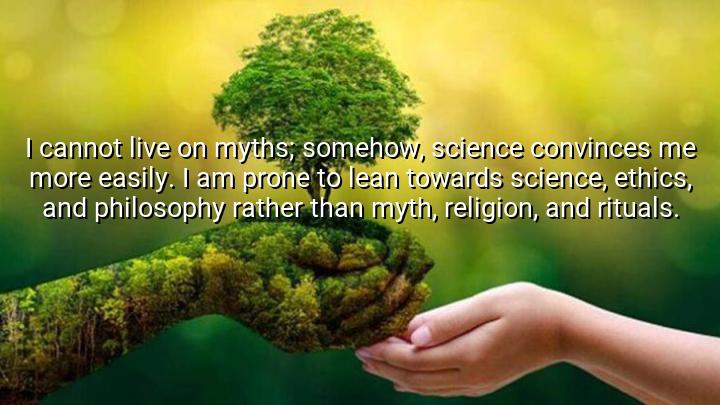




The quote by Kamal Haasan reflects his rationalist worldview and preference for empirical understanding over traditional beliefs. By stating, “I cannot live on myths,” Haasan emphasizes his reliance on science as a guiding framework for interpreting the world. He finds that scientific reasoning convinces him more convincingly than unverified stories or cultural myths, suggesting a commitment to evidence, logic, and inquiry.
The origin of this perspective comes from Haasan’s life as a renowned Indian actor, filmmaker, and thinker, known for his outspoken views on social issues and progressive thought. His experiences in the arts and public life have shaped a mindset that values ethics, philosophy, and reason over blind adherence to religion, rituals, and myth. By contrasting these domains, Haasan signals a thoughtful engagement with life that prioritizes understanding over tradition.
Haasan’s words also highlight a broader philosophical stance. Leaning towards science and ethics suggests a concern for truth, morality, and the consequences of human actions, rather than unquestioned adherence to dogma. He sees philosophy as a complementary discipline that helps navigate complex moral and existential questions, bridging the gap between empirical knowledge and reflective thought.
Ultimately, the quote underscores Haasan’s rational and reflective approach to life. It conveys a deliberate choice to seek meaning and guidance through reason, ethics, and philosophy rather than accepting narratives dictated by myths, rituals, or religion. His perspective encourages critical thinking and emphasizes the importance of understanding the world through observation, reflection, and conscious ethical consideration.

AAdministratorAdministrator
Welcome, honored guests. Please leave a comment, we will respond soon