

Often, we feel helpless in lots of situations in our lives. The way anger gets a grip on us is it seems to be a way to extricate ourselves from helplessness.
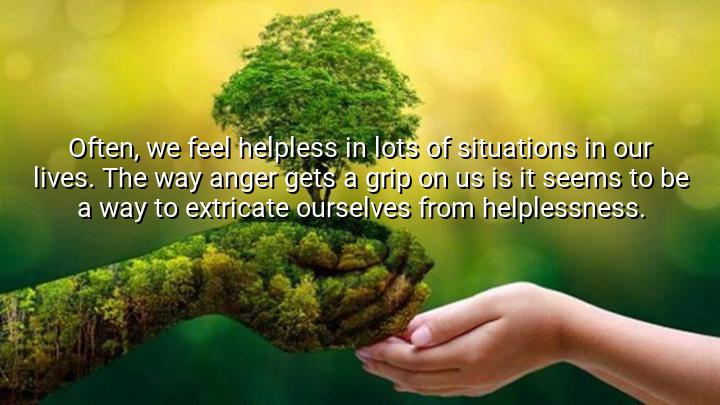




The quote by Martha Nussbaum delves into the psychological role that anger plays in moments of helplessness. Nussbaum suggests that when we find ourselves in difficult or powerless situations, anger often emerges as a way to regain control or agency. It serves as an emotional response that makes us feel empowered, even though it might not be a rational or constructive solution to the problem at hand.
The helplessness referenced in the quote can come from various circumstances in life, such as personal struggles, conflicts, or injustices that make us feel like we have no way out. In such instances, anger provides a temporary illusion of strength, giving us the impression that we can resist or change the situation. However, Nussbaum points out that while anger might feel like an escape, it doesn't necessarily solve the underlying issue and may, in fact, perpetuate the feeling of powerlessness.
By framing anger as a response to helplessness, Nussbaum sheds light on how our emotions can sometimes be a coping mechanism rather than a true solution. The quote suggests that while anger might momentarily lift us out of a state of emotional paralysis, it does not provide a lasting remedy and can lead to more damage if it remains unchecked. Instead of being a constructive force, anger can mask deeper vulnerabilities and prolong feelings of helplessness.
In its origin, this quote is rooted in Nussbaum's exploration of emotions and their impact on human behavior. Her work frequently examines how emotions like anger influence moral decisions and how they are shaped by our perception of control and vulnerability. This quote reflects her broader philosophy on the complexity of human emotions and the challenges of overcoming emotional traps like anger when faced with helplessness.

NTbui nam tuan
This idea makes me think about the role of anger in social movements and activism. When groups feel powerless, does collective anger become a powerful catalyst for change? How can leaders harness this anger without letting it turn destructive? It’s fascinating to consider anger both as a personal and societal response to helplessness.
KHTang Kha Han
Nussbaum’s perspective suggests that anger is more complex than just a negative emotion—it’s tied to our desire for control. How might this understanding influence therapeutic approaches for people struggling with anger management? Could reframing anger as a sign of unmet needs or frustrations lead to more compassionate interventions? I’d like to explore how this concept applies across different cultures and personal experiences.
NNPhuong Nghi Nguyen
I’m intrigued by the idea that anger offers a sense of agency when people feel stuck. But is this always beneficial, or can it sometimes lead to rash decisions or strained relationships? How can individuals balance the empowering aspect of anger with the need for calm and rationality? This quote opens up questions about emotional intelligence and self-awareness.
CTCam Tu
This quote highlights the psychological function of anger in difficult situations. Could recognizing anger as a way to combat helplessness change how we approach conflict resolution? For example, might addressing the underlying sense of powerlessness reduce anger’s intensity? It also makes me think about whether societal structures contribute to feelings of helplessness, thus fueling widespread anger.
DDUYIUNGOC
Martha Nussbaum’s insight about anger as a response to helplessness is really compelling. Do you think anger is a natural coping mechanism to regain control, or could it sometimes mask deeper feelings like fear or sadness? How might understanding this help people deal with their anger more constructively? I wonder if channeling anger productively could empower individuals rather than just serve as a momentary escape from helplessness.