

It's usually a big kind of vent of frustration or anger or sadness that puts me in the right frame of mind to write. It's such a cliche to say that artists write when they're down, but it's true for me. It's a relief to get out what's eating away at my heart or my soul or my head.
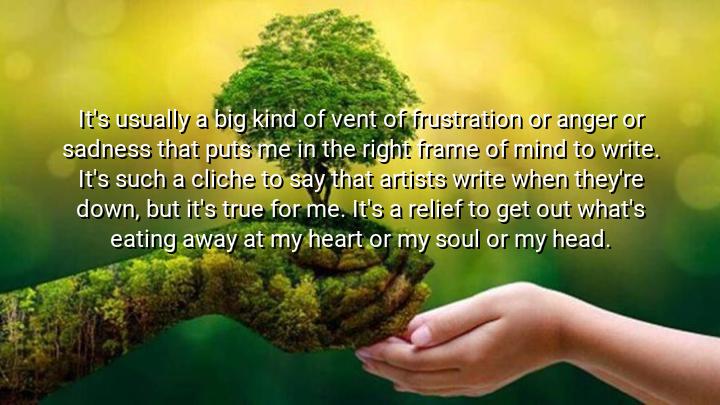




In this quote, Ellie Goulding reflects on how strong emotions like frustration, anger, and sadness serve as catalysts for her creativity. She admits that these intense feelings help her enter the right frame of mind to write music, as they give her the emotional fuel needed to create. This connection between emotional distress and creative output is common for many artists, and Goulding acknowledges it as a personal truth, despite the idea being somewhat of a cliché.
Goulding also highlights the therapeutic nature of songwriting. She views the process of writing as a form of emotional release, where she can express what is eating away at her heart, soul, or mind. This act of releasing built-up emotions through music offers her a sense of relief, helping her cope with difficult feelings. It’s a way for her to channel pain or frustration into something productive and meaningful, turning negative emotions into a creative force.
The quote underscores the idea that art can be a powerful tool for self-expression and emotional processing. For Goulding, songwriting becomes more than just a job or a craft; it serves as a way to confront and deal with the internal struggles she faces. By externalizing her emotions in her music, she is able to confront them, making her songs not only a personal catharsis but also something that resonates with her audience.
Ultimately, this quote speaks to the universal truth that emotions, even negative ones, can be a powerful source of creativity. For Goulding, writing music is a way to process anger, sadness, and frustration in a productive and healing way, allowing her to transform those feelings into a form of art that connects with both herself and her listeners.

HMHue Minh
This quote makes me think about the universality of art as an outlet for difficult emotions. Do non-artists experience similar relief by expressing their feelings in other ways? How important is it for everyone to have some form of emotional release, whether through creativity, conversation, or other means? Understanding this could highlight the broader role of emotional expression in well-being.
UGUser Google
I wonder if the relief that comes from channeling inner turmoil into art could eventually become addictive. Does the creative process sometimes risk reinforcing sadness or frustration because those emotions are so closely tied to productivity? I’d like to hear thoughts on how artists can find joy and inspiration without relying on pain.
QMNguyen Quang Minh
The idea that many artists write when they’re down feels like a cliché, but one that resonates widely. How does society’s romanticizing of the 'tortured artist' impact mental health for creatives? Could it discourage seeking help or pressure artists to maintain a certain emotional state? It would be valuable to discuss how to support artists holistically beyond their emotional struggles.
NQNhi Quach
It’s interesting how emotional pain can become a driving force for artistic expression. Do you think this process of venting through art is a form of self-therapy? And if so, how might artists develop healthier coping mechanisms that don’t depend solely on being 'down'? Exploring this might reveal ways to sustain creativity without being trapped by negative emotions.
MQLe Dinh Minh Quan
This quote really captures the connection between emotional struggle and creativity. Do you think artists who write from a place of sadness or frustration create more authentic work? Also, could relying on negative emotions to fuel creativity be harmful over time? I’m curious about how artists balance the cathartic benefits of expressing pain with maintaining their emotional well-being.