

It is good to forget one's anger against one's wrongdoer, whoever he may be, for countless number of evils will quickly grow from this anger.
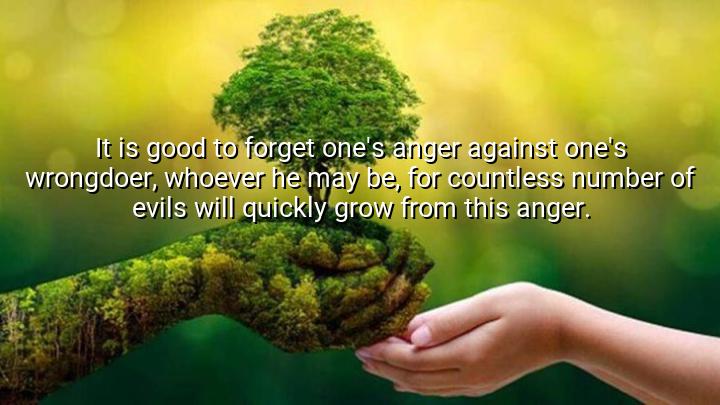




In this quote, Thiruvalluvar emphasizes the importance of forgiving and letting go of anger toward those who have wronged us. He argues that holding onto anger only leads to the growth of countless evils, suggesting that resentment and grudges can multiply and cause further harm if not addressed. Thiruvalluvar implies that forgiveness is a form of emotional release, preventing the destructive consequences of prolonged anger and promoting peace of mind.
Thiruvalluvar’s wisdom highlights the idea that anger is a seed that, if nurtured, can lead to further emotional damage. By holding onto anger, individuals are more likely to experience continued negative feelings like bitterness, hatred, and frustration. This emotional buildup can lead to a vicious cycle where unresolved anger leads to more harm, both for the individual holding onto the anger and for those around them. The key to breaking this cycle, according to Thiruvalluvar, is to release anger and move toward forgiveness.
The origin of this perspective comes from Thiruvalluvar’s renowned work, the Tirukkural, which is a collection of couplets that provide moral guidance on various aspects of life, including ethics, relationships, and self-control. Thiruvalluvar’s teachings emphasize virtues like self-discipline, forbearance, and peace, all of which align with the idea that letting go of anger can lead to a more harmonious and fulfilling life.
Ultimately, Thiruvalluvar’s quote serves as a reminder that anger is not only emotionally harmful but also a gateway to further negativity. By forgiving those who have wronged us, we free ourselves from the destructive power of anger and prevent the additional evils that might arise from it. This act of forgiveness promotes inner peace and helps us cultivate healthier, more positive relationships with others.

DDManh Dung Do
I’m intrigued by how this quote addresses the ripple effects of sustained anger, calling it a source of many evils. Could this be a call for emotional self-care as much as moral guidance? How might mindfulness or spiritual practices support individuals in forgetting anger while maintaining their dignity and boundaries? I’d like to explore practical steps for this difficult emotional work.
TDNguyen Tan Dat
The recommendation to forget one’s anger toward wrongdoers raises questions about justice and accountability. Does forgetting anger risk overlooking the need for consequences? How do we ensure that forgiveness or forgetting doesn’t lead to complacency or repeated harm? I’m curious about frameworks that balance letting go of anger with protecting oneself and others.
NHNguyen Ngoc Ha
This quote suggests that clinging to anger is harmful not just to others but to ourselves as well. Could this be linked to the psychological effects of chronic anger, like stress or bitterness? How do we differentiate between healthy anger that motivates change and destructive anger that causes harm? I’d appreciate perspectives on using anger constructively while also knowing when to let it go.
LALi Alena
I find this idea both challenging and freeing—that anger can breed countless evils if not forgotten. How realistic is it to forget anger, especially when the wrongdoing is severe? What practices or mindsets help people genuinely move past their anger without holding grudges? I’m interested in how different cultures view the relationship between anger, forgiveness, and healing.
UGUser Google
This quote highlights the wisdom in letting go of anger towards those who wrong us, emphasizing the dangers of holding onto such feelings. I wonder, though, is forgetting anger the same as forgiving? How can someone truly release anger without suppressing or denying their feelings? I’d like to understand how this approach balances emotional health with the risk of enabling repeated harm from wrongdoers.