

The most valuable wealth of a man is his knowledge, which cannot be destroyed; all other riches that he has gained are not considered to be wealth at all.
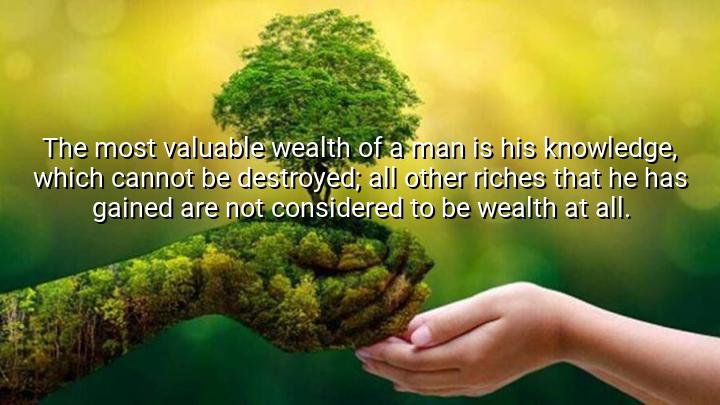




The quote “The most valuable wealth of a man is his knowledge, which cannot be destroyed; all other riches that he has gained are not considered to be wealth at all.” is attributed to Thiruvalluvar, the ancient Tamil poet and philosopher, best known as the author of the Tirukkural, a classic text on ethics, governance, and morality. At its core, the statement emphasizes that knowledge is the truest form of wealth, surpassing material possessions, because it endures and cannot be taken away or destroyed.
The origin of this idea lies in the Tirukkural, a foundational work of Tamil literature composed over 2,000 years ago. Thiruvalluvar’s teachings often highlighted values such as virtue, wisdom, and justice, while warning against the fleeting nature of material riches. In this quote, he contrasts the permanence of knowledge with the impermanence of material wealth, which can be lost, stolen, or wasted. This reflects the text’s broader theme that true prosperity lies in moral and intellectual growth rather than material gain.
The meaning of the quote underscores that knowledge provides lasting power and resilience. Unlike money, land, or possessions, which are vulnerable to external forces, knowledge becomes part of a person’s character and can guide them through all circumstances. It equips individuals with the ability to adapt, create, and contribute meaningfully, making it the only form of wealth that grows the more it is shared.
Ultimately, Thiruvalluvar’s wisdom remains timeless. By elevating knowledge above all other riches, he reminds us that material wealth is superficial if it is not supported by wisdom and understanding. True wealth, therefore, lies in cultivating the mind, as it not only benefits the individual but also enriches society as a whole.

AAdministratorAdministrator
Welcome, honored guests. Please leave a comment, we will respond soon