

In many ways, anger is a misdirected plea for love.
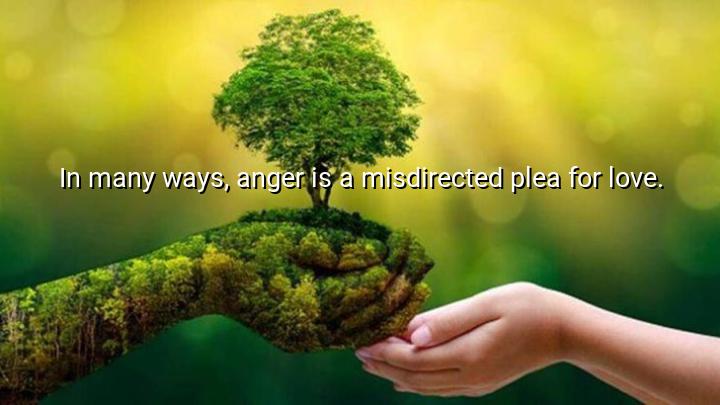




In this quote, Karen Salmansohn suggests that anger often stems from a deeper emotional need, which is the desire for love and connection. Rather than being purely a negative emotion, anger can be a misdirected plea for affection, understanding, or validation. When individuals feel ignored, neglected, or misunderstood, anger may surface as a way to express that need, even if it's not directly asking for love in a clear or constructive manner. Salmansohn’s view challenges the conventional perception of anger as an inherently destructive emotion, instead offering a more compassionate perspective.
Salmansohn implies that when people feel disconnected or unloved, they may express their frustration through anger because they don’t know how to ask for love or support more effectively. This leads to a cycle where anger becomes the outward expression of an unmet emotional need, which, instead of fostering connection, can create distance and misunderstandings. The key is recognizing that the root cause of anger is often a cry for help, rather than something that is aimed solely at confrontation or destruction.
The origin of this quote stems from Salmansohn’s work as a writer and motivational speaker, where she frequently explores the complexities of human emotions and the ways they shape our relationships and behaviors. Her insights are rooted in the belief that emotional intelligence and understanding can transform negative emotions into opportunities for personal growth and healthier connections.
Ultimately, Salmansohn’s quote encourages a shift in how we view anger, urging us to recognize it as a signal of deeper emotional needs rather than as an isolated and harmful reaction. By understanding that anger may be a misdirected plea for love, individuals can address the underlying causes of their feelings and seek healthier ways to communicate their needs, fostering more compassionate and meaningful relationships.

HHao
This quote feels very hopeful because it suggests that beneath anger lies a positive, human desire for love and acceptance. But it also challenges me to consider whether all anger can or should be interpreted this way. Are there forms of anger that are justified responses to injustice rather than misdirected pleas? How do we balance validating anger while also addressing its emotional roots?
UGUser Google
I wonder about the implications of this quote for mental health. If anger is a sign of unmet love, does that mean healing anger requires nurturing compassion and connection? How do therapists incorporate this understanding into their practice? It also makes me think about self-compassion—how often do we get angry at ourselves because we feel unloved or unworthy?
LTLaf Tui
This perspective invites a deep question: If anger is a plea for love, how do we teach people to express their needs more directly and healthily? Does society discourage vulnerability to the point that anger becomes the default outlet? It would be interesting to discuss how emotional education and self-awareness could reduce the frequency and intensity of angry outbursts.
TTrang
Reading this, I’m curious if this interpretation of anger applies universally, or if it’s more relevant in personal relationships than in broader social or political contexts. For example, when groups express collective anger, is it also a plea for love or respect? This quote makes me want to explore how recognizing the emotional roots of anger might influence conflict resolution on a larger scale.
Ttuannanhh
I find this idea both beautiful and heartbreaking. It suggests that anger is a form of pain disguised as aggression, which makes me question how we respond to anger in others. Are we too quick to shut it down or retaliate instead of recognizing it as a call for connection? I’d love to hear more about practical ways to respond to anger with love rather than judgment.