

In Hinduism, Shiva is a deity who represents transformation. Through destruction and restoration, Shiva reminds us that endings are beginnings, and that our world is constantly undergoing a cycle of birth, death and rebirth.
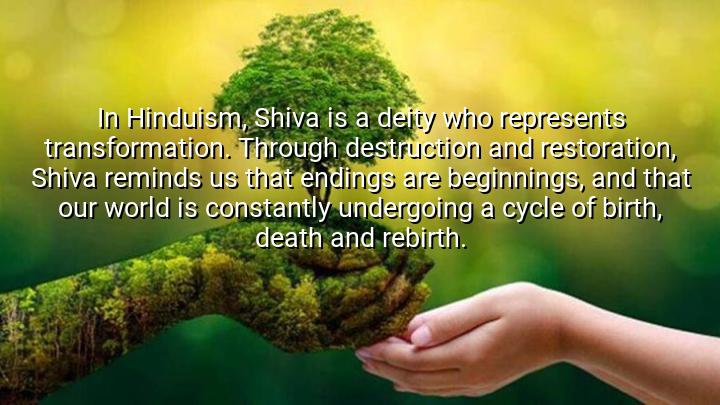




Karen Salmansohn’s quote explores the concept of Shiva, a prominent deity in Hinduism, known for embodying the principles of transformation. Shiva’s role is multifaceted: he is associated with destruction but also restoration, which reflects the cyclical nature of existence. In Hindu philosophy, destruction is not merely an end but a necessary process that makes way for new beginnings. Shiva’s actions remind us that the process of birth, death, and rebirth is ongoing, and that each phase in this cycle is interconnected and essential for renewal.
Salmansohn’s interpretation emphasizes the idea that endings are not permanent or final; rather, they are a natural part of a broader cycle of renewal and growth. By highlighting Shiva’s symbolic role in life cycles, she connects this notion of transformation to the way individuals and societies undergo changes, both positive and negative. The idea that death and destruction are steps toward new creation can be a powerful reminder of the potential for growth even in difficult times.
The quote reflects the central philosophical themes of Hinduism, particularly the concept of cycles of life and the impermanence of the material world. Shiva, as the deity who governs the cycles of creation and destruction, encapsulates the idea that change is inevitable and necessary for progress. Through this lens, individuals can view personal struggles or losses as temporary phases that contribute to personal growth or transformation in the long term.
The origin of the quote lies in the religious and mythological significance of Shiva in Hinduism. As a key figure in the Trimurti, which includes Brahma (the creator) and Vishnu (the preserver), Shiva’s role in destruction and transformation is essential for the balance of the universe. Karen Salmansohn draws upon these themes to reflect on how, like Shiva, we can embrace the idea that endings are not to be feared but understood as opportunities for renewal.

AAdministratorAdministrator
Welcome, honored guests. Please leave a comment, we will respond soon