

In a controversy the instant we feel anger we have already ceased striving for the truth, and have begun striving for ourselves.
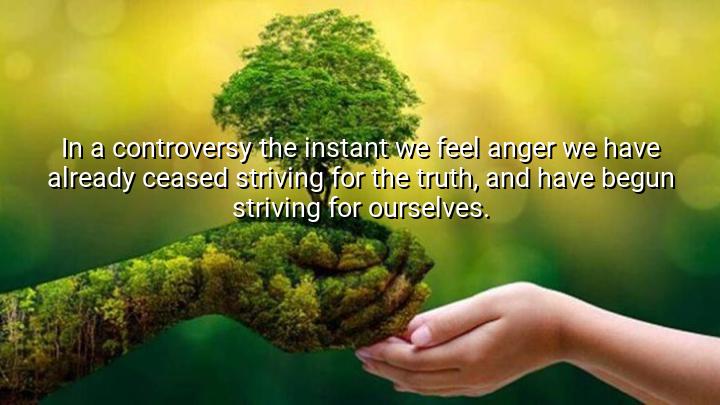




In this quote, Buddha highlights the detrimental impact that anger can have on our pursuit of truth during a controversy or disagreement. He suggests that the moment we become angry, our focus shifts away from seeking an objective or rational understanding of the situation and instead turns toward defending our own ego or personal interests. This shift indicates that anger clouds our judgment, making it more difficult to engage in an honest search for truth and instead encourages a more self-centered approach to resolving conflicts.
Buddha's words reflect his teachings on the importance of mindfulness and emotional control, suggesting that true wisdom and understanding come from maintaining composure and clarity, even in the face of disagreement. When we allow anger to take hold, we lose our ability to engage in a productive dialogue that is based on reason and objectivity. Instead, we become focused on winning the argument or protecting our pride, which ultimately hinders the possibility of finding a true resolution.
The quote also underscores the idea that ego and self-interest often take precedence over truth in heated moments. Anger can easily transform a situation where both parties are striving for understanding into one where personal pride and defensiveness dominate. Buddha’s message encourages individuals to approach controversies with humility, to set aside personal attachments, and to focus on the collective good or shared understanding rather than individual victory.
Ultimately, this quote serves as a reminder of the importance of emotional awareness in any disagreement. By recognizing when anger arises and consciously choosing to let go of it, we can continue striving for truth rather than letting our emotions guide us toward conflict and misunderstanding. Buddha teaches that true wisdom lies in calmness, objectivity, and the pursuit of mutual understanding rather than personal gain.

KHKien Hoang
I’m intrigued by the idea that anger is a marker of lost objectivity. Does this mean emotional intelligence involves recognizing when our feelings hijack our reasoning? How can we train ourselves to pause and reassess our motivations during disagreements? It suggests that striving for truth requires not just intellectual effort but emotional maturity as well.
KHTruong Kha Han
This quote raises questions about the nature of conflict and communication. Is it realistic to expect that we can fully separate our ego from controversies? Or is some level of self-interest inevitable? How might this understanding influence conflict resolution strategies or mediation techniques? It seems to call for greater self-awareness as a foundation for honest and open dialogue.
TVtruong vy
Reading this, I wonder how applicable it is in today’s polarized world, where anger seems rampant. Can acknowledging this shift from truth to self help reduce hostility in political or social arguments? What practical steps can people take to stay focused on the truth rather than personal victory? It also makes me reflect on my own experiences and how often I’ve fallen into this trap.
GHBui Tran Gia Hung
This makes me think about the role of humility in debates. If anger means striving for ourselves, does that imply humility is key to pursuing truth? How do we balance passion and rationality when discussing deeply held beliefs? It seems to suggest that letting go of ego might open the door to more meaningful conversations and genuine understanding.
HTHong Tham
I find this idea compelling because it suggests that anger is a sign we’ve moved away from objective reasoning. Does this mean that to truly seek truth, we must practice detachment from our ego? How can we cultivate the emotional discipline needed to maintain this stance? It also raises the question of whether suppressing anger is healthy or if it’s about transforming that energy into constructive dialogue.