

I wrestled with anger from the age of sixteen. It's still one of my nemeses. I have to remember that the word of God says, 'Be slow to anger.'
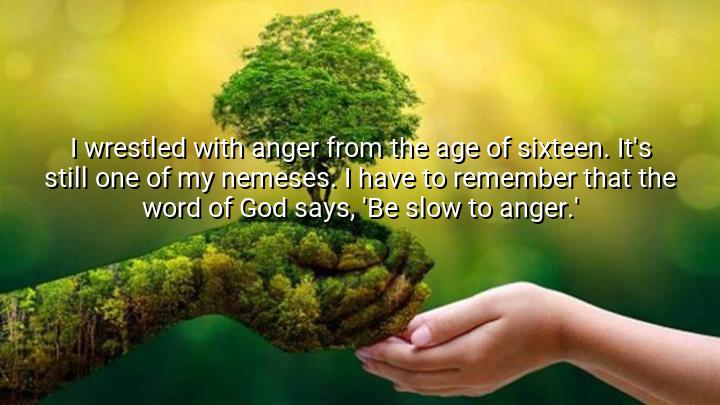




The quote "I wrestled with anger from the age of sixteen. It's still one of my nemeses. I have to remember that the word of God says, 'Be slow to anger,'" by Bernice King, reflects her personal struggle with managing anger and the ongoing challenge it presents in her life. King, the daughter of Dr. Martin Luther King Jr., acknowledges that anger has been a constant emotional battle for her since her teenage years. The use of the word "nemeses" suggests that anger is a formidable adversary in her emotional and spiritual journey, one that she must continually face and overcome.
In the quote, King highlights how her relationship with anger is a longstanding struggle. Despite the personal growth and spiritual insight she has gained, anger remains a powerful emotion that she has to consciously manage. She draws strength from the teachings of God, specifically the Bible's counsel to "be slow to anger." This reflects her attempt to align her emotional responses with her faith, which encourages patience and self-control.
By referencing the Bible verse, King invokes a spiritual framework to guide her in overcoming anger. The idea of being "slow to anger" aligns with the Christian values of forgiveness, patience, and understanding, all of which require one to manage one's emotional responses. King suggests that despite her struggles, her faith provides a source of guidance and strength, reminding her to remain calm and composed in the face of emotional challenges.
Ultimately, King's quote speaks to the universal struggle of managing difficult emotions, especially anger, and the importance of drawing upon spiritual or philosophical teachings to navigate such challenges. It underscores the tension between personal feelings and the effort to live in accordance with higher moral or religious principles. Through her example, King encourages others to embrace patience and mindfulness in their emotional responses.

MKNguyen Minh Khoi
Bernice King’s framing of anger as a lifelong challenge feels very humanizing. It challenges the idea that emotional mastery is ever fully achieved. How can acknowledging ongoing struggles with emotions reduce stigma and encourage more open conversations about mental and spiritual health?
APThanh An Pham
The reference to scripture in managing anger highlights the role of moral guidance in personal growth. How do teachings like ‘be slow to anger’ resonate with contemporary views on expressing versus suppressing emotions? Is there a balance between honoring feelings and practicing restraint that can be universally applied?
TPThanh Pham
I wonder how Bernice King’s faith influences her approach to anger compared to secular methods like therapy or mindfulness. Are there unique benefits or limitations to grounding emotional work in religious beliefs? This invites a broader conversation about the diversity of tools people use to navigate complex emotions.
CTNguyen Cong Tai
This quote makes me reflect on how long-term struggles with anger shape a person’s character and relationships. Does recognizing anger as a ‘nemesis’ suggest an ongoing battle rather than a quick fix? How might this perspective encourage patience and self-compassion for those dealing with difficult emotions over time?
TNnguyen hoang thanh ngan
Bernice King’s honesty about wrestling with anger from a young age is deeply relatable. How do religious teachings like ‘be slow to anger’ help people manage their emotions in practical terms? Is faith a source of strength or sometimes a challenge when dealing with intense feelings? I’m curious how spiritual guidance intersects with modern approaches to emotional regulation and mental health.