

Environmental injustice is a tangible, intolerable example of an exhibited moral laxity and minimal concern for healthy standards by corporations and political structures based on the race, ethnicity, and class of those being impacted.
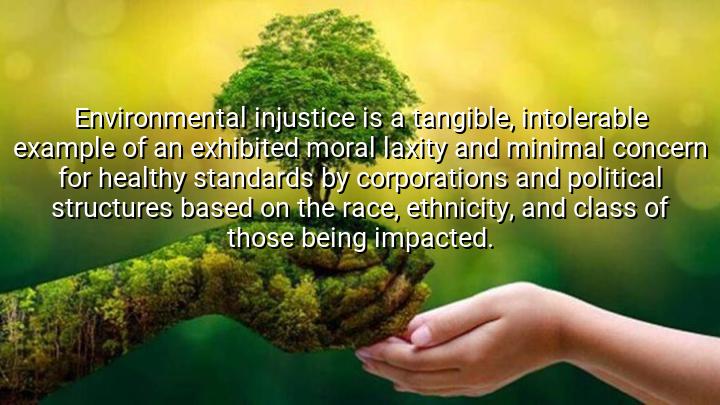




Bernice King's quote addresses the issue of environmental injustice, emphasizing that it is a tangible and intolerable manifestation of moral laxity. She argues that this type of injustice is a result of corporations and political structures failing to prioritize the health and well-being of marginalized communities. Specifically, it highlights the disproportionate impact of environmental degradation on individuals based on their race, ethnicity, and class. The quote underscores how these social factors often determine who bears the brunt of harmful environmental practices, such as pollution or poor living conditions, creating inequity in environmental protection.
King points out that corporations and political systems frequently fail to adopt higher ethical standards when making decisions that affect the environment, particularly when it comes to low-income and minority communities. This lack of responsibility and care reveals an underlying moral failure, as these groups are often seen as expendable or less worthy of protection. By calling attention to the racial, ethnic, and class dimensions of environmental harm, King draws a connection between systemic inequalities and the environment, urging that these issues be addressed with more urgency.
The term environmental injustice refers to the systemic patterns where certain communities—often communities of color or lower socioeconomic status—are exposed to higher levels of pollution or hazardous conditions, and have fewer resources to resist or recover from these impacts. King’s statement critiques the unequal application of environmental policies that fail to protect these vulnerable populations, advocating for a more equitable approach to environmental standards.
Ultimately, King’s quote highlights the need for a more inclusive and ethical approach to environmental policies, one that takes into account the needs of historically marginalized groups. It is a call to recognize and address the intersection of race, ethnicity, class, and environmental health, urging a shift toward social justice and environmental protection that benefits all people equally.

AAdministratorAdministrator
Welcome, honored guests. Please leave a comment, we will respond soon