

I don't want to go on stage with anger. And that's why I worked so hard to look within and change myself and evolve.
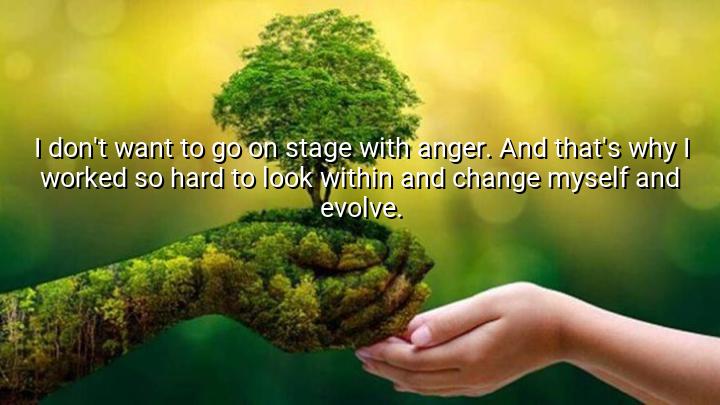




In this quote, Carlos Mencia reflects on the importance of personal growth and self-awareness, particularly in the context of his work as a comedian. He explains that he doesn't want to go on stage driven by anger, as it can negatively affect his performance and the connection he builds with the audience. Instead, he emphasizes the value of looking inward and striving to change and evolve personally, ensuring that his emotions are constructive rather than destructive.
Mencia's statement highlights the emotional demands of being a comedian, where the balance between personal experiences and professional performance is crucial. By recognizing that anger could hinder his ability to engage with his audience, Mencia chose to focus on self-improvement and emotional evolution. His choice to work on himself reflects a desire to bring a more positive, authentic energy to his performances, rather than allowing negative emotions to dominate.
The origin of the quote likely comes from Mencia's journey in the entertainment industry, where he has spoken openly about his experiences and the challenges of navigating personal emotions while maintaining a career in comedy. Known for his bold humor, Mencia also understands the responsibility of using his platform in a way that reflects his growth and maturity. This quote reveals his commitment to not only evolve as a performer but also as an individual.
Ultimately, Mencia’s quote serves as a reminder that personal development is key to emotional and professional success. By choosing to work on anger and evolve, Mencia showcases the importance of self-reflection and the power of emotional maturity in shaping one's career and life. It encourages others to not be driven by negativity but instead to focus on growth and positive change.

MHMinh Hien
Carlos Mencia’s reflection makes me consider how common it is for people in high-pressure public roles to wrestle with their inner emotions. Does this admission challenge the stereotype that performers thrive on intense, raw emotions like anger? How might this commitment to evolving oneself affect mental health and longevity in a demanding career? It seems to promote a healthier, more sustainable approach to creativity and self-expression.
DLDoi Le
This statement highlights a powerful decision to prioritize personal growth over reacting with anger. I wonder, though, does this mean that anger has no place in performance, or is it more about managing when and how it is expressed? Could there be situations where channeling anger authentically might resonate more with audiences? It would be interesting to explore how different emotions shape the impact of a performance.
HNNguyen Hai Nguyen
I appreciate the vulnerability in admitting the need for change and evolution. It raises questions about how self-awareness can impact not just performance but overall well-being. What specific methods or practices might someone use to look within and transform their emotional state? Could this kind of inner work be beneficial beyond the stage, perhaps in everyday life and relationships? I'd love to hear perspectives on the connection between emotional growth and professional success.
NHQuynh Anh Ngo Ha
This quote makes me think about the role of anger in creative expression. Is it always detrimental, or can it sometimes fuel powerful performances? Carlos Mencia's choice to avoid anger on stage suggests a deliberate shift towards positivity or control. But does suppressing anger risk losing authenticity, or can it actually enhance one's ability to communicate effectively? I'm curious about the balance between emotional honesty and emotional control in performance art.
DALe Duc Anh
It's inspiring to hear someone openly discuss the importance of self-reflection and personal growth, especially in the context of performance. I wonder how common it is for performers or public figures to struggle with managing their emotions before going on stage. Does this process of evolving internally suggest that true artistry requires emotional maturity? How might this mindset affect the way audiences connect with the performer?