

I believe art is utterly important. It is one of the things that could save us.
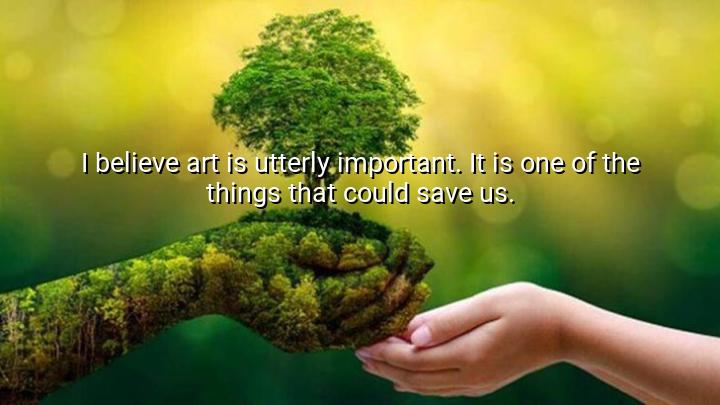




The quote "I believe art is utterly important. It is one of the things that could save us" by Mary Oliver reflects the poet’s deep belief in the transformative and redemptive power of art. Oliver, an American poet known for her works celebrating nature and the human experience, suggests that art is not just a form of personal expression but a vital tool that can help heal and guide humanity through difficult times. In this quote, she elevates art as something essential to human survival, potentially offering solutions to emotional, spiritual, or societal challenges.
By describing art as something that could "save us," Oliver emphasizes its potential to offer solace, inspire change, and provide meaning in a world often marked by chaos and uncertainty. Art—whether through poetry, music, visual art, or other creative forms—has the power to reflect the human condition, express deep emotions, and offer insight into the complexities of life. For Oliver, art serves as a means of finding connection, understanding, and healing in moments of despair or confusion.
Oliver’s perspective also suggests that art is not merely decorative or ornamental; it is something deeply rooted in human existence and essential to our well-being. It can offer a sense of purpose, help process grief, and bring people together, making it a crucial part of life, especially during times of crisis. Art has the capacity to inspire and provide hope, offering ways to cope with the uncertainties and struggles inherent in life.
In essence, Mary Oliver’s quote highlights the critical importance of art in navigating the complexities of human existence. By considering art as something that could "save us," she suggests that it has the potential to restore our sense of hope, foster healing, and guide us through life's challenges. Art becomes a powerful, life-affirming force in the world.

TLPhan Thi Trut Loi
I feel torn reading this. On one hand, I absolutely believe in art’s transformative power. On the other, I’m skeptical about putting so much weight on it. Can it truly 'save' us, or are we just romanticizing its role? What about when art is co-opted for profit, propaganda, or exclusion? Maybe the real question is how we choose to engage with art—because that might determine whether it uplifts or just decorates.
QMNguyen Quang Minh
There’s a quiet hopefulness in this quote that I really admire. It makes me wonder what role art plays in individual healing versus collective survival. Can a painting or a poem really change how a society behaves or treats its most vulnerable members? Or is its power more subtle—like shifting hearts over time? I want to believe it can save us, but I also worry that art alone isn't enough without systemic change.
KCSo Koo Chouu
Oliver’s words feel both poetic and urgent. In a world driven by technology, speed, and productivity, art asks us to slow down and feel. But do you think society takes art seriously enough to let it 'save' us? Funding for arts programs is often the first thing cut. If we truly believed in art’s power, wouldn’t we protect and elevate it more? Maybe the quote is a call to rethink our cultural priorities.
KWKhang Wang
This quote made me pause and think about how art has impacted my life. It really has the power to bring comfort, perspective, and even resistance. But I’m curious—what forms of art did Mary Oliver have in mind? Poetry? Music? Street murals? Can all artistic expression hold this kind of redemptive potential, or does it depend on intention, quality, or audience? I’d love to hear examples of art that she believed actually 'saved' people.
SDShop Dmi
I’m drawn to the passion behind this quote, but I have to ask—do all people see art as essential? In some communities, access to food, healthcare, or education might seem far more 'important' than art. So how do we reconcile this belief with real-world inequalities? Does this quote reflect a kind of privilege, or is Oliver suggesting that art’s value transcends even the most basic needs when it comes to preserving our humanity?