

When it's over, I want to say: all my life I was a bride married to amazement. I was the bridegroom, taking the world into my arms.
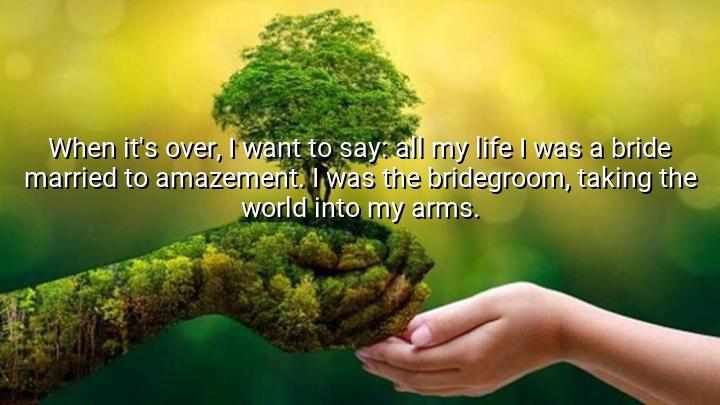




The quote by Mary Oliver — "When it's over, I want to say: all my life I was a bride married to amazement. I was the bridegroom, taking the world into my arms." — reflects Oliver’s desire to live a life full of awe, wonder, and deep connection with the world around her. She envisions herself as both a bride and a bridegroom, roles traditionally associated with love, commitment, and union. Being married to amazement symbolizes her commitment to appreciating the beauty, mystery, and miracles of life, while embracing the world with open arms, like a bridegroom welcoming a partner.
Oliver’s words highlight the awe that comes with truly living and experiencing the world with a sense of reverence and curiosity. By framing her life in terms of marriage to amazement, she suggests that each moment should be approached with wonder and gratitude. The roles of bride and bridegroom evoke a sense of joy, intimacy, and celebration, which she wishes to carry with her throughout her life, embracing both the ups and downs with love and appreciation.
The origin of this quote is grounded in Oliver’s poetry, which often explores themes of nature, spirituality, and the human experience. As a poet, Oliver was deeply connected to the natural world and used her work to reflect on the profound beauty she observed in nature. This quote, much like her poems, is a reminder of the importance of engaging with life fully and openly, with the heart of a bride and the courage of a bridegroom, ready to embrace what the world has to offer.
Ultimately, Oliver’s quote encourages us to approach life with wonder and an open heart. It suggests that by being open to the world with a sense of amazement and love, we can experience a deeper connection to both the world and ourselves. It speaks to the idea that life, like marriage, should be a continual journey of joy, discovery, and profound connection.

XKcao xuan khai
Reading this made me emotional. It’s such a tender and personal vision for what it means to have truly lived. The language of marriage to 'amazement' and 'the world' suggests a lifelong love affair with existence itself. But can everyone access that kind of wonder, or is it a privilege shaped by circumstance? What about those whose lives have been full of struggle and disappointment—can they feel this way too?
QTDinh Quang Trung
This is one of the most beautiful ways I’ve ever seen someone talk about the end of life. It feels less like a farewell and more like a victory speech. But I wonder, what does it actually take to be able to say this with confidence when your time comes? Is it about attitude, achievements, or relationships? What does it mean to live a life worthy of such a poetic closing statement?
GDGold D.dragon
What strikes me most is the duality she embraces—both the bride and the bridegroom. It feels like a metaphor for being both receptive and active in the world. But is it really possible to live life with that level of intensity and reverence all the time? How do people maintain that kind of poetic attention without burning out or becoming overwhelmed by life’s unpredictability?
MCHang Minh Chau
Mary Oliver’s words are always soul-stirring, but this one really hits home. To think of amazement as something you commit to, like in marriage, is both profound and a little intimidating. Is this kind of openness to life a personality trait, or something you cultivate intentionally? I’d love to hear how others interpret the idea of 'taking the world into your arms'—what does that even look like in daily life?
QTQuan Ta
This quote absolutely floored me. There’s something so sacred and poetic in the idea of being both the bride and the bridegroom to life itself. It makes me wonder: am I actively participating in the wonder of the world around me, or just letting it pass by? What practices or habits help someone live this kind of fully engaged, awe-filled life Mary Oliver describes so vividly?