

To live in this world, you must be able to do three things: to love what is mortal; to hold it against your bones knowing your own life depends on it; and, when the time comes to let it go, to let it go.
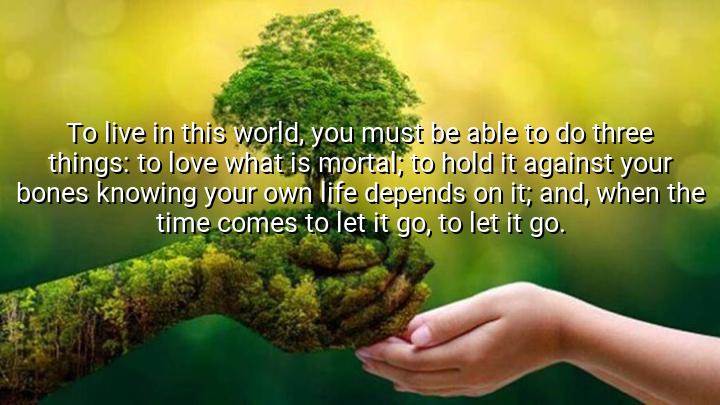




The quote "To live in this world, you must be able to do three things: to love what is mortal; to hold it against your bones knowing your own life depends on it; and, when the time comes to let it go, to let it go" by Mary Oliver explores the delicate balance between attachment, love, and acceptance in the face of life's impermanence. Oliver suggests that to truly live, we must embrace the things that are temporary and fragile, knowing that our time with them is finite. The ability to love deeply and with full awareness, while also understanding the need to let go, is central to living an emotionally rich and fulfilled life.
Mary Oliver, an American poet known for her work about nature and the human experience, often explored themes of connection to the natural world and the cycles of life. This quote reflects her profound understanding of both the beauty and the transience of life. Oliver encourages us to love what we hold dear, not with the expectation that it will last forever, but with an understanding that the very fragility of these moments makes them precious. The idea of holding something close to you, knowing it may not be permanent, speaks to the depth of her message about life and death.
The phrase "love what is mortal" points to the human condition, where everything we care about is subject to change, aging, and eventual loss. "To hold it against your bones knowing your own life depends on it" suggests that we should embrace life and love with awareness and vulnerability, understanding that these experiences shape us deeply and that our very existence is tied to these connections. Yet, the final part, "when the time comes to let it go, to let it go", speaks to the wisdom of knowing when to release attachments—whether to people, experiences, or things—without regret.
Ultimately, Oliver’s words urge us to approach life with full presence and openness, to cherish what we have while it lasts, and to understand that letting go is a necessary part of the journey. It is a reminder that attachment is not about clinging, but about fully experiencing life’s impermanence and embracing it with grace. By doing so, we live more deeply and with fewer fears, knowing that we are part of something much larger than ourselves.

AAdministratorAdministrator
Welcome, honored guests. Please leave a comment, we will respond soon