

Five enemies of peace inhabit with us - avarice, ambition, envy, anger, and pride; if these were to be banished, we should infallibly enjoy perpetual peace.
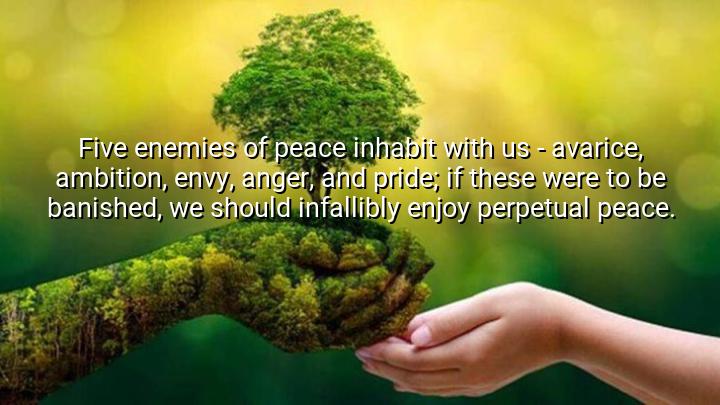




In this quote, Petrarch identifies five key emotional and psychological enemies of peace: avarice, ambition, envy, anger, and pride. He suggests that these negative forces exist within us and, if allowed to dominate our lives, prevent us from achieving inner peace and harmony. According to Petrarch, these emotions fuel conflict, both within ourselves and in our relationships with others. He argues that by eliminating these destructive traits, we would experience perpetual peace and a lasting sense of calm and fulfillment.
Petrarch's mention of avarice (greed) and ambition suggests that the constant desire for more—whether in terms of wealth, power, or status—disturbs our peace of mind. Envy arises when we desire what others have, leading to resentment and discontent. Anger disrupts peace by fostering conflict, while pride often prevents us from admitting fault or seeking reconciliation. These five emotions, according to Petrarch, create a toxic environment that keeps us from attaining true peace and satisfaction.
The origin of this quote lies in Petrarch's deep understanding of human nature and the inner struggles that prevent spiritual and emotional growth. As an influential Italian poet and scholar during the Renaissance, Petrarch was concerned with the development of personal virtue and the pursuit of peace. His works often reflected on the human condition and the challenges that individuals face in achieving inner tranquility, particularly in a world filled with distractions and material pursuits.
Ultimately, Petrarch’s quote serves as a reminder that true peace is not just the absence of external conflict but the elimination of internal turmoil. The enemies of peace—greed, ambition, envy, anger, and pride—must be recognized and overcome if we wish to live a life of harmony and contentment. By focusing on humility, contentment, and self-awareness, we can cultivate a deeper, more lasting peace both within ourselves and in our relationships with others.

Vvutrinh
This quote makes me think about the dual nature of human traits like ambition and pride. Can these characteristics be enemies of peace only when taken to extremes? Is there a threshold where positive traits become destructive? It also makes me wonder how mindfulness or meditation practices might help individuals recognize and reduce these internal ‘enemies’ to cultivate lasting peace.
GQTran pham gia quyen
The idea that peace could be ‘infallible’ once these enemies are removed is inspiring. Yet it raises a question: does this mean peace is fundamentally an internal state rather than something created by external conditions? If so, how can we foster this internal peace collectively in societies marked by inequality and injustice? It’s a challenging but hopeful perspective.
BTBell Tinker
Reading this, I feel a tension between idealism and realism. If these traits are so ingrained, what practical steps can individuals take to ‘banish’ or at least mitigate them? Does this suggest a lifelong spiritual or psychological journey? Also, how does this internal peace connect to external peace in communities and nations? Is one a prerequisite for the other?
HVHuong Vu
This quote prompts reflection on the complexity of human nature. Are these five traits truly the root of all conflict, or are there other factors at play? How might cultural differences influence the way these ‘enemies’ manifest and affect peace? It also makes me think about how spirituality and philosophy across the world address the challenge of overcoming internal obstacles.
GDGold D.dragon
I find this statement profound but somewhat idealistic. While removing avarice, ambition, envy, anger, and pride sounds perfect, aren’t some of these traits, like ambition, also driving forces for growth and achievement? Could it be that the key is transforming these ‘enemies’ rather than eliminating them? How might one distinguish between harmful pride and healthy self-respect, for example?