

Books have led some to learning and others to madness.
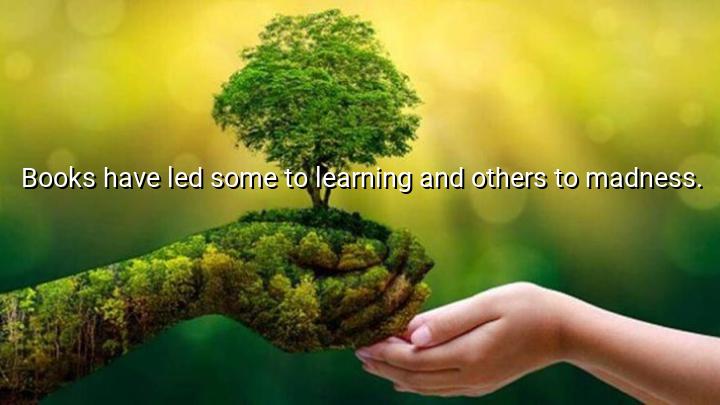




The quote by Petrarch, "Books have led some to learning and others to madness," reflects on the profound and varied influence that books and knowledge can have on individuals. Books are powerful tools for intellectual growth, capable of expanding one’s understanding of the world and fostering wisdom. For some, engaging with written works opens the door to enlightenment, critical thinking, and the pursuit of truth, shaping their minds in positive and transformative ways.
However, Petrarch also acknowledges that books can have a darker effect. Immersion in certain ideas or extreme interpretations of knowledge can lead to confusion, obsession, or even madness. The quote highlights the dual nature of learning: while education can elevate, unchecked curiosity or exposure to misleading or disturbing content can overwhelm the mind. This reflects an awareness of the responsibility that comes with reading and the careful discernment required in the pursuit of knowledge.
The origin of this quote lies in Petrarch’s life as a 14th-century scholar, poet, and early humanist. He was deeply engaged with classical texts and the revival of ancient learning, observing firsthand how exposure to ideas could transform people’s thinking and behavior. His experience taught him that books are not neutral: they can inspire greatness, but they also carry the risk of leading one astray if approached without judgment or moderation.
Ultimately, Petrarch’s statement is both a celebration of the power of books and a cautionary reminder. It underscores that the pursuit of learning is not merely about acquiring information but also about developing wisdom, balance, and the ability to navigate the complexities of knowledge without being consumed by it.

AAdministratorAdministrator
Welcome, honored guests. Please leave a comment, we will respond soon