

Everybody has a breaking point. It's tough to ignore the impulse to respond with anger.
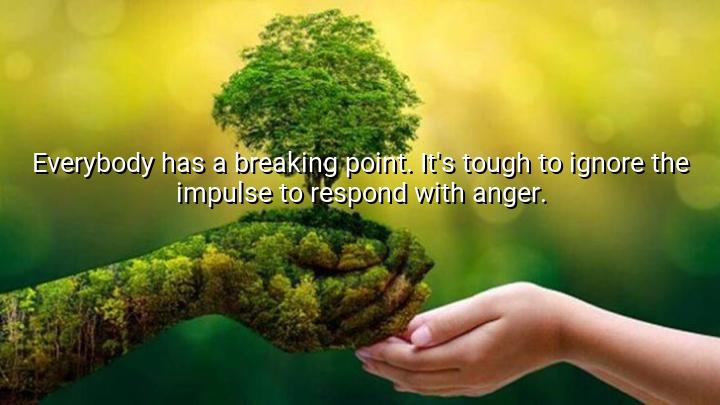




In this quote, Andrew Shaffer acknowledges the universal truth that everybody has a breaking point, a moment when emotions become overwhelming and difficult to control. He recognizes that when people reach this threshold, it’s tough to resist the impulse to react with anger. Shaffer highlights the natural human tendency to express frustration or hurt through anger, especially when pushed beyond one's emotional limits.
The quote points to the fact that anger is often an automatic response to stress or emotional distress. While it’s understandable to feel anger when faced with difficult situations, the challenge lies in controlling that initial reaction and deciding how to handle it. Shaffer’s words remind us that, although it’s natural to feel anger, it’s important to find healthier ways to process and express these emotions rather than allowing them to dictate our actions.
The origin of this perspective may stem from Shaffer’s own reflections on human behavior, as he explores the complexities of emotions in his work. By acknowledging that anger is a common, almost instinctive reaction, he encourages readers to recognize their emotional triggers and work to manage them. This insight suggests that, while we may not always be able to control our emotions in the moment, we can control how we respond to them.
Ultimately, Shaffer’s quote serves as a reminder that while anger can be a powerful emotion, it is possible to rise above it. Recognizing our breaking points and the impulse to react with anger is the first step in gaining control over our emotional responses and choosing more constructive ways to deal with life's challenges.

GDGold D.dragon
The idea that ignoring the impulse to respond with anger is tough reminds me of how challenging emotional control really is. How much of this impulse is influenced by immediate circumstances versus deeper emotional triggers or past experiences? Understanding this could help tailor interventions to manage anger more effectively and compassionately.
VNVi Nguyen
This quote made me reflect on the importance of self-care and boundaries. If everyone has a breaking point, how do we recognize and respect ours before reaching it? Can asking for help or stepping away be seen as strength rather than weakness? It also makes me think about forgiveness—both of others and ourselves—when anger does slip out.
NNNinh Nguyen
Reading this, I’m curious about the physiological and psychological signs that signal we’re nearing our breaking point. Can becoming aware of these signs help prevent outbursts of anger? Also, how do cultural differences influence how people express or manage anger? It’s clear that while the impulse is universal, responses can vary widely.
NBNam Nguyen bao
I find this perspective realistic and empathetic, recognizing that anger is a natural response when overwhelmed. What worries me is how often society expects people to suppress anger without providing tools to cope. How might workplaces or schools better support emotional regulation? It raises important questions about patience, empathy, and the social consequences of reaching one’s breaking point.
GDGold D.dragon
This quote resonates because it acknowledges a universal human experience—everyone has limits. It makes me wonder about the strategies people use to resist the natural impulse to respond with anger when pushed beyond their breaking point. Can mindfulness or emotional intelligence be effectively taught to help with this? Also, how can understanding our own limits improve our relationships and communication?