

Every day we have plenty of opportunities to get angry, stressed or offended. But what you're doing when you indulge these negative emotions is giving something outside yourself power over your happiness. You can choose to not let little things upset you.
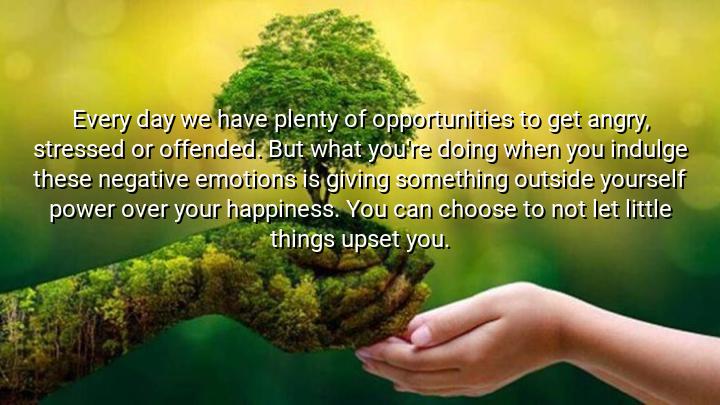




In this quote, Joel Osteen emphasizes that each day presents numerous opportunities for individuals to experience anger, stress, or offense, but how we respond to these situations is within our control. He suggests that by indulging in negative emotions, we are essentially allowing external circumstances or people to hold power over our happiness. Osteen is pointing out that we often give away our peace of mind by reacting to situations in ways that disrupt our emotional balance.
Osteen's message highlights the importance of emotional control and choice in maintaining personal happiness. Rather than letting external events dictate our feelings, he encourages the practice of mindfulness and self-awareness, urging individuals to recognize that they have the power to choose their reactions. By making the conscious decision not to let minor frustrations upset us, we retain our autonomy over our emotions and well-being.
The quote also underscores the idea that little things—often minor annoyances—can be major distractions if we allow them to be. Osteen suggests that by not giving in to these small irritations, we can preserve our peace and maintain a more positive outlook. This attitude fosters resilience, allowing us to navigate challenges without losing our emotional stability.
Ultimately, Osteen’s quote is a reminder that happiness and emotional well-being are largely shaped by how we respond to the world around us. It encourages us to take responsibility for our emotions and to avoid letting negative influences undermine our inner calm. By choosing not to be upset by trivial matters, we empower ourselves to live more peacefully and joyfully.

GDGold D.dragon
Finally, I wonder how cultural differences influence the acceptance of this philosophy. Are some societies more inclined to value emotional control and positivity, while others emphasize open emotional expression? How does this shape the way people respond to challenges and manage their happiness? Osteen’s quote encourages reflection on the diversity of emotional coping strategies.
Lluongkimthanh
Joel’s statement suggests that external circumstances only have the power we grant them. How does this idea interact with situations of systemic inequality or trauma, where external factors have profound impacts? Can the message of choosing not to be upset be empowering without minimizing real struggles? This tension is important to acknowledge when applying such advice.
MLMinh Le
The quote also touches on the idea of personal responsibility for one’s happiness. To what extent can individuals control their reactions in complex social or professional environments? Is it always fair to expect someone not to be upset when faced with injustice or mistreatment? Exploring these limits can deepen our understanding of emotional autonomy.
TPNguyen Thanh Phatd
I’m curious about the distinction between ‘little things’ and more significant issues. How do we decide what deserves our emotional energy and what doesn’t? Joel Osteen’s advice seems to encourage prioritizing peace, but is there a risk of becoming indifferent or suppressing important feelings? This quote invites a nuanced discussion on emotional boundaries.
KDTuan Kiet Doan
This perspective makes me think about the role of mindfulness in daily life. Can cultivating awareness help us catch negative emotions before they take hold? Osteen’s message suggests that by not giving outside events power, we preserve our happiness. But how do we develop this skill, and what challenges do people face in practicing emotional detachment?