

Be not angry that you cannot make others as you wish them to be, since you cannot make yourself as you wish to be.
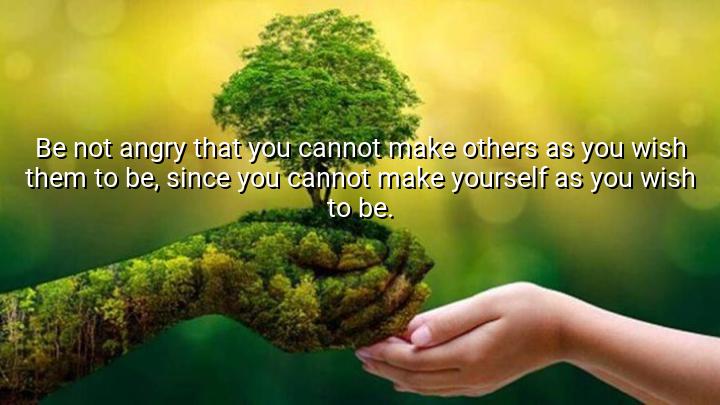




In this quote, Thomas à Kempis offers wisdom on the nature of acceptance and personal growth. He suggests that it is futile to become angry or frustrated when others do not meet our expectations or behave in the way we want them to. Instead, Kempis reminds us that, just as we cannot always shape others to our desires, we also struggle to perfectly shape our own selves into the ideal version we wish to be. This highlights the difficulty of achieving personal perfection and the limitations inherent in controlling both ourselves and others.
Kempis' words reflect a deep understanding of human nature and the challenge of self-improvement. We often desire to control or influence the behavior of those around us, but the truth is that true change starts within. His message encourages humility—acknowledging that if we cannot completely shape ourselves into the people we aspire to be, it is unreasonable to expect the same of others.
The quote also touches on the importance of self-awareness and patience. By acknowledging our own imperfections and the limits of our control, Kempis advocates for a mindset of understanding and tolerance toward others. Rather than being upset by the flaws or differences of others, we should focus on our own journey of growth and recognize that change takes time, both for ourselves and those around us.
Ultimately, this quote serves as a reminder that anger and frustration with others can be avoided if we accept the inherent limitations of human nature. By fostering compassion and recognizing our own struggles, we can create a more peaceful and understanding environment, both within ourselves and in our relationships with others.

AVAnh Vu
Finally, this quote makes me think about forgiveness and patience. If we accept that we cannot perfect ourselves or others, does that open the door to greater kindness and understanding? How might this mindset impact the way we approach conflicts or disappointments in daily life? It’s a gentle reminder of human fallibility.
HYHa hoang Yen
The statement also invites reflection on the nature of expectations. How do our ideals shape our perceptions of others, and how might lowering rigid expectations lead to greater peace? Thomas a Kempis offers a timeless lesson in accepting the limits of influence and focusing on self-development.
THLe Thanh Hung
I’m curious about the psychological implications of this message. Does recognizing our own imperfections help us develop compassion toward others? Could this awareness improve not only personal relationships but also social cohesion? The quote encourages a balanced view of self and others, emphasizing growth over judgment.
XHNguyen Xuan Hung
This quote raises questions about control and acceptance. If we struggle to shape ourselves as we wish, is it realistic to expect others to conform to our standards? Thomas a Kempis seems to suggest that anger at others is misplaced. How can embracing this idea reduce conflict and foster empathy in our interactions?
CLCu Le
Thomas a Kempis’ quote challenges us to reflect on our expectations of others and ourselves. How often do we get frustrated trying to change others when we haven’t achieved our own ideals? This perspective encourages humility and patience, reminding us that self-improvement is a continuous process. It also makes me wonder how accepting others as they are might lead to more harmonious relationships.