

A humble knowledge of thyself is a surer way to God than a deep search after learning.
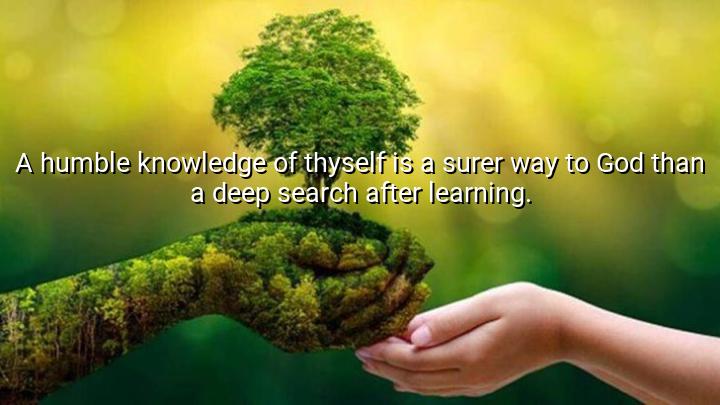




The quote by Thomas a Kempis emphasizes the importance of self-knowledge over the mere accumulation of learning in spiritual growth. Kempis suggests that humility and introspection—understanding one’s own nature, strengths, and weaknesses—bring individuals closer to God more effectively than intellectual pursuits alone. True spiritual insight begins with an honest appraisal of the self rather than external study.
Kempis highlights that humility is a central component of meaningful knowledge. Recognizing one’s limitations and flaws fosters moral and spiritual development, whereas pursuing knowledge for its own sake without introspection can lead to pride or superficial understanding. In this context, learning is valuable only when it is accompanied by awareness of oneself.
The quote also reflects the broader principle that spiritual education differs from secular learning. While formal study can provide facts and intellectual frameworks, authentic connection to God and moral growth arise from reflection, self-discipline, and ethical living. Knowledge of the self becomes the foundation for deeper wisdom and faith.
Originating from Thomas a Kempis, a 15th-century Christian monk and author of The Imitation of Christ, the quote encapsulates his philosophy of humility and spiritual devotion. Kempis’ insight emphasizes that a humble understanding of oneself is a path to divine connection, showing that knowledge in service of the spirit surpasses mere academic or theoretical learning.

AAdministratorAdministrator
Welcome, honored guests. Please leave a comment, we will respond soon