

Art is pattern informed by sensibility.
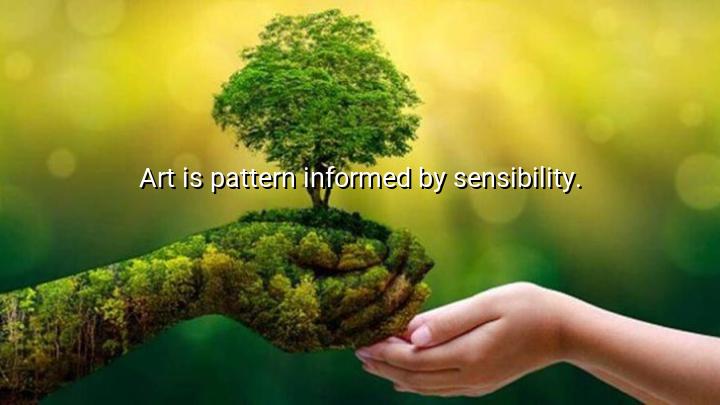




The quote "Art is pattern informed by sensibility" by Herbert Read highlights the relationship between structure and emotion in the creation of art. Read, an English art historian and poet, suggests that art is not just about creating forms or shapes, but about imbuing those forms with emotional depth and personal insight. The pattern represents the structure, technique, and composition of the work, while sensibility refers to the artist's emotional response and sensitivity to the world around them. Art, in this view, is the fusion of intellectual design and emotional expression.
By emphasizing pattern, Read acknowledges that art requires a certain level of order, structure, and intention. Whether it’s the arrangement of colors in a painting, the rhythm in a piece of music, or the structure of a poem, pattern gives art coherence and meaning. However, Read points out that without sensibility, the pattern becomes cold and mechanical. It is the artist's emotional response, intuition, and personal connection to the subject matter that breathes life into the structured form.
This quote underscores the idea that the best art arises when pattern and sensibility are in harmony. The artist brings their emotions, experiences, and sensitivity to the creation process, transforming an abstract pattern into something that resonates deeply with the viewer. In this sense, art becomes a dynamic interaction between the intellectual and the emotional, blending the external world with the inner world of the creator.
Ultimately, Read’s words remind us that art is not just about technique or aesthetic appeal; it is about conveying human experience and emotion through carefully crafted forms. Art succeeds when pattern serves as a vessel for sensibility, allowing the artist to communicate complex feelings, ideas, and perspectives in a way that transcends mere representation.

MONguyen Thi Mai Oanh
The idea that art is both pattern and sensibility seems to suggest that art isn’t just about the visual or technical side of things—it’s also about how the artist feels or perceives the world. Does this mean that truly profound art isn’t just about following rules or structures, but also about translating personal experience or emotion into those structures? How much does this subjective nature of sensibility influence how different people experience the same piece of art?
TOLong Thi Oanh
I’m curious whether all types of art can truly be defined by the combination of pattern and sensibility. Can abstract art, for example, still be considered meaningful even if it doesn’t rely on recognizable patterns, or does it follow a different kind of sensibility? Does the sensibility factor influence how we, as viewers, interpret the patterns or shapes on a canvas, regardless of style?
TNThanh Nguyen
This quote makes me think about the balance in art. The pattern could represent the framework or skill involved in creating art, while the sensibility is the unique touch that makes it distinct. Is it possible to have a technically perfect piece of art that doesn’t connect with us emotionally? Or is it the sensibility that turns a simple pattern into something that touches the soul?
NMTran Ngoc Mai
Herbert Read’s take on art being both pattern and sensibility feels like a beautiful marriage of logic and emotion. I wonder, does it mean that all successful art, regardless of the style or medium, should balance both technical skill (the pattern) and personal insight (the sensibility)? And how much does this ‘sensibility’ vary from one artist to another—does it change based on personal experiences or cultural influences?
CHChu Hang
I find this idea intriguing, especially the phrase 'pattern informed by sensibility.' What does it mean for an artist’s sensibility to inform their patterns? Does it imply that art isn’t just about technique, but about the artist’s ability to bring emotion or perception into those techniques? Can art truly be ‘just’ pattern, or does sensibility always need to be present to give it soul and depth?