

Anger is a killing thing: it kills the man who angers, for each rage leaves him less than he had been before - it takes something from him.
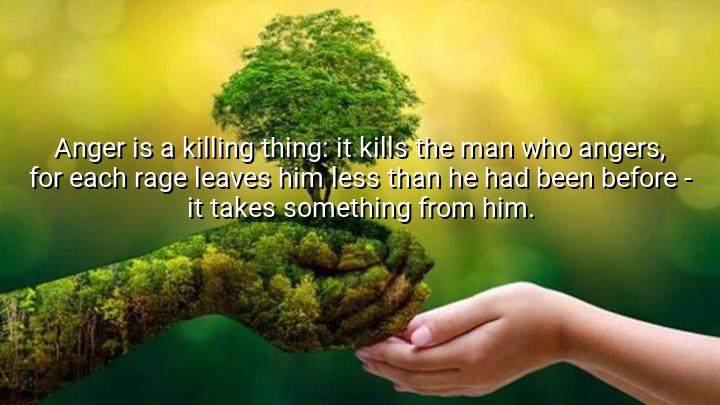




The quote by Louis L'Amour — "Anger is a killing thing: it kills the man who angers, for each rage leaves him less than he had been before — it takes something from him." — emphasizes the destructive nature of anger. L'Amour suggests that anger, rather than simply affecting the person or situation that provokes it, gradually diminishes the person who experiences it. Each episode of rage chips away at the individual, leaving them less whole, less peaceful, and more drained than before. This perspective highlights that anger can ultimately harm the person feeling it more than anyone else.
L'Amour's statement reflects the psychological understanding that anger consumes emotional and mental energy, leading to a loss of self-control and inner peace. When we allow anger to dictate our actions or thoughts, it takes away from our ability to think clearly, make wise decisions, and maintain emotional balance. Over time, rage can erode our sense of well-being, leaving us more vulnerable and less fulfilled.
The quote also suggests that anger can have long-term effects on a person's character and relationships. By focusing on rage, an individual may miss opportunities for growth, forgiveness, and emotional healing. Instead of resolving issues or finding solutions, anger often results in a cycle of internal loss, diminishing the person’s ability to respond to challenges in a positive, constructive way.
Ultimately, L'Amour’s quote serves as a reminder of the costs of holding onto anger and rage. While anger is a natural human emotion, it can take away much more than it offers if not managed. By letting go of destructive emotions, individuals can preserve their peace and well-being, avoiding the long-term effects of anger that leave them “less than” they were before.

8ZBot 8 Zen
Reading this, I feel the weight of anger’s impact beyond just the moment of fury. It’s like a slow erosion of the self. What are some signs that anger is beginning to ‘kill’ us internally, and how can we intervene? Also, does this idea apply equally to all kinds of anger—brief irritation versus long-term resentment? Exploring these nuances could be helpful for emotional health.
VDDo Vuong Dat
This quote suggests that anger is inherently harmful, but I wonder about its role in motivation or social justice. Can anger be a catalyst for positive change, or does it inevitably harm the individual? How do activists or leaders harness anger without letting it diminish them? I’d love to hear thoughts on channeling anger productively while avoiding personal loss.
MLNguyen Mai Linh
The notion that each rage leaves us ‘less than we had been’ is powerful and somewhat sad. It makes me question if suppressing anger might be healthier than expressing it, or if that just delays the damage. How do we find constructive outlets for anger so it doesn’t ‘take something’ from us? I’m interested in how therapy or self-care can support this process.
HVNguyen Hoang Viet
This quote resonates with me on a personal level because I’ve seen how anger can consume energy and peace. Does the idea that anger ‘kills’ us imply that it’s a kind of self-sabotage? How can mindfulness or emotional intelligence help prevent anger from eroding our well-being? It would be interesting to discuss practical ways to protect ourselves from anger’s draining effects.
KULe Kim Uyen
I find this perspective compelling because it highlights the internal cost of anger, something often overlooked. But I’m curious if there are situations where anger might be empowering or necessary. Can anger ever build us up rather than take away from us? Or is the key difference how we manage and express it? I’d love to explore the balance between healthy and unhealthy anger.