

A man who has not passed through the inferno of his passions has never overcome them.
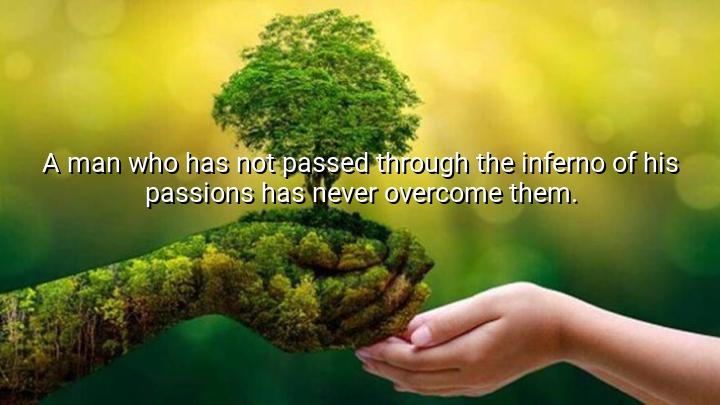




In this quote, Carl Jung suggests that true personal growth and self-mastery can only be achieved by confronting and overcoming one's deepest emotional struggles. The phrase "passed through the inferno of his passions" metaphorically refers to the intense, often tumultuous emotions that everyone experiences, such as anger, desire, or fear. Jung emphasizes that simply experiencing these emotions is not enough; one must face them directly and work through them to truly overcome their power.
Jung's use of the word "inferno" suggests that the process of confronting these passions is neither easy nor comfortable. It likens emotional struggles to a fiery, destructive force that can be painful but necessary for personal transformation. Only by enduring and navigating through this emotional "fire" can a person achieve emotional resilience and a deeper understanding of themselves.
The quote reflects Jung's broader psychological theory, which emphasizes the importance of self-awareness and integration of the unconscious aspects of the psyche. Jung believed that in order to achieve psychological wholeness, individuals must confront the shadow parts of themselves—those dark or suppressed emotions and impulses. Avoiding or repressing these feelings only leads to inner conflict, while facing them head-on allows for greater growth and balance.
Ultimately, Jung’s statement encourages self-exploration and the willingness to face the difficult emotions that everyone experiences. It underscores the idea that true mastery over one's emotions comes from embracing and understanding them, rather than avoiding or suppressing them. Through this process, individuals can transform their weaknesses into strengths and achieve a more integrated and fulfilling life.

VHCao Thi Viet Hong
Finally, Jung’s metaphor prompts reflection on resilience. How do individuals find the strength to endure their personal ‘infernos’? Is it through support systems, personal values, or spiritual beliefs? This quote highlights the transformative power of struggle and the profound journey toward self-overcoming.
TNPham Thi Ngoc
The quote also invites exploration of cultural attitudes toward passion. In some traditions, passion is celebrated, while in others, it’s seen as a threat to reason. How does Jung’s idea bridge these views by suggesting that passion must be faced and transcended? This raises questions about how societies encourage or inhibit emotional exploration.
CTDa Co Ten
I’m curious about the implications of this quote for mental health. Could ‘passing through the inferno’ relate to therapeutic experiences where one confronts and processes intense emotions? Jung’s perspective seems to validate the struggle as a necessary part of healing and growth, rather than something to be feared or avoided.
DPDung Pham
This quote makes me reflect on the nature of passion and control. Are passions inherently destructive until we actively engage with and understand them? Jung’s idea implies a journey through chaos to reach clarity. How does this process differ for individuals, and what role does self-awareness play in overcoming these inner fires?
HDHai Hung Dang
Carl Jung’s metaphor of passing through the ‘inferno of passions’ suggests that true growth comes from confronting our deepest struggles. Does this mean that avoiding emotional turmoil prevents genuine self-mastery? It’s fascinating to consider how enduring intense emotions might be necessary for transformation. I wonder how people can face their inner conflicts without being overwhelmed or consumed by them.