

Even a happy life cannot be without a measure of darkness, and the word happy would lose its meaning if it were not balanced by sadness. It is far better take things as they come along with patience and equanimity.
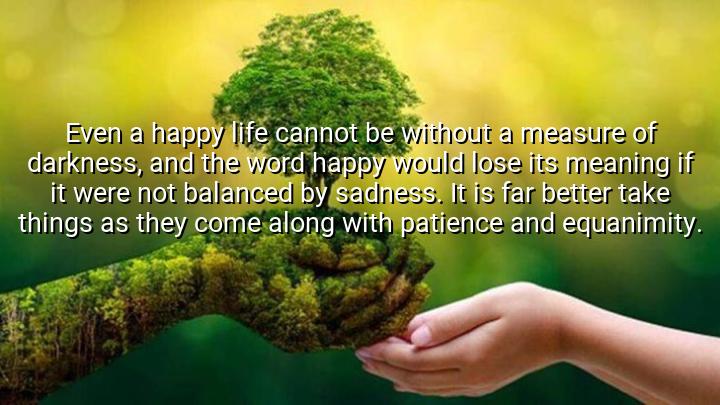




Carl Jung's quote delves into the idea that happiness cannot exist without sadness, as the two emotions are interdependent. He suggests that a happy life would be devoid of meaning if it lacked the contrast of darkness or sorrow. The experience of sadness highlights the depth and value of joy, allowing us to truly understand and appreciate it. Without this balance, happiness would be shallow and one-dimensional.
Jung also touches on the importance of patience and equanimity in navigating life's challenges. Instead of resisting or avoiding the inevitable darkness and sadness that come our way, he advocates for accepting them with a calm and balanced approach. By cultivating a sense of equanimity, we can maintain our inner peace and perspective, regardless of the emotional ups and downs that life may bring.
The quote reflects Jung's understanding of the human condition, emphasizing that both light and dark are essential aspects of personal growth and development. He viewed the integration of these opposing forces as key to achieving a sense of wholeness. Rather than striving for an unrealistic, perpetual happiness, Jung encourages embracing all emotions as part of the journey toward self-awareness and inner harmony.
Originating from his broader psychological theories, this quote encapsulates Jung's belief in the process of individuation, where individuals learn to integrate their shadow—the parts of themselves they may repress or deny. He believed that true happiness arises not from avoiding darkness, but from accepting and integrating all parts of oneself.

AAdministratorAdministrator
Welcome, honored guests. Please leave a comment, we will respond soon